Best Backpacks, Lunch Boxes, and School Supplies for Preschoolers
For preschoolers, size and ease of use matter far more than features — pick small, light, and simple across every category.
Phase: Preschool · Topic: Baby Products · Type: Evergreen · Reading time: ~8 min
The average preschool supply list runs about fifteen items. The average parent adds another ten things while walking the aisles at Target. Then the backpack arrives home and a four-year-old tries to put it on and immediately pitches forward because the bag is half their size. Preschool gear is one of the categories where buying more, bigger, or "growing room" consistently backfires. This guide covers what to actually get — specific products, real sizing rules, and what to skip.
The backpack sizing problem nobody mentions
Most kids' backpack roundups lump together ages three through ten. That is too wide a range to be useful. Preschoolers (ages 3–5) need a bag that is 12–14 inches tall, no more than 6–9 liters in volume, and — this part is almost never stated clearly — no wider than the child's torso. When the bag extends past the shoulders, kids compensate by swaying when they walk. At that size and weight, pediatric guidelines recommend keeping the loaded bag under 10% of the child's body weight.
For a 35-pound four-year-old, that means the packed bag should weigh no more than 3.5 pounds. A lunch box alone can hit 1.5 pounds when full. This is why the bag itself needs to be light — ideally under one pound empty.
What to look for: adjustable padded shoulder straps (the strap ends should sit at the child's armpits, not mid-chest), a chest clip to keep the bag from sliding off their small shoulders, easy-pull zippers, and a top handle so a teacher can grab it off a cubby hook without drama.
Specific picks worth considering:
The Skip Hop Sparks Preschool Backpack ($19–24 on Amazon) is consistently the value leader for ages 3–4. It is 12 inches tall, weighs 0.4 pounds empty, has padded straps, and comes in enough designs that children feel genuinely excited about carrying it. It fits a lunch box, a change of clothes, and a folder — which is exactly what preschool requires, no more. Skip Hop's Zoo collection (shaped like animals) sits at the same price point and the same dimensions.
The Bentgo Kids Backpack (~$45) is the step-up option: better build quality, more durable zippers, a water bottle side pocket, and a chest strap that actually holds. Testers at BabyGearLab consistently rate it near the top of preschool picks for durability. It runs slightly larger at 14 inches, making it a good choice if your child will be in the same program through kindergarten.
For families who want something that lasts several years, L.L.Bean's Junior Original Pack ($35) is sized for ages 4–6 and is backed by the brand's lifetime guarantee. The quality gap over a $20 bag becomes obvious by spring.
What to skip: anything marketed as a "mini backpack" shaped like a character with hard molded edges — the shape looks adorable and packs terribly — and any bag over 16 inches that is sold as "growing room." An oversized bag on a preschooler is uncomfortable and almost certainly overpacked.
Lunch boxes: the features that actually matter
The lunch box category has genuinely improved in the last several years. The gap between a good one and a bad one for preschoolers is almost entirely about two things: whether a four-year-old can open it independently, and whether it leaks.
Preschool teachers will tell you — with feeling — that they spend real time at every lunch period helping children wrestle open containers. This matters more than insulation ratings, more than compartment count, and more than whether the design is cute.
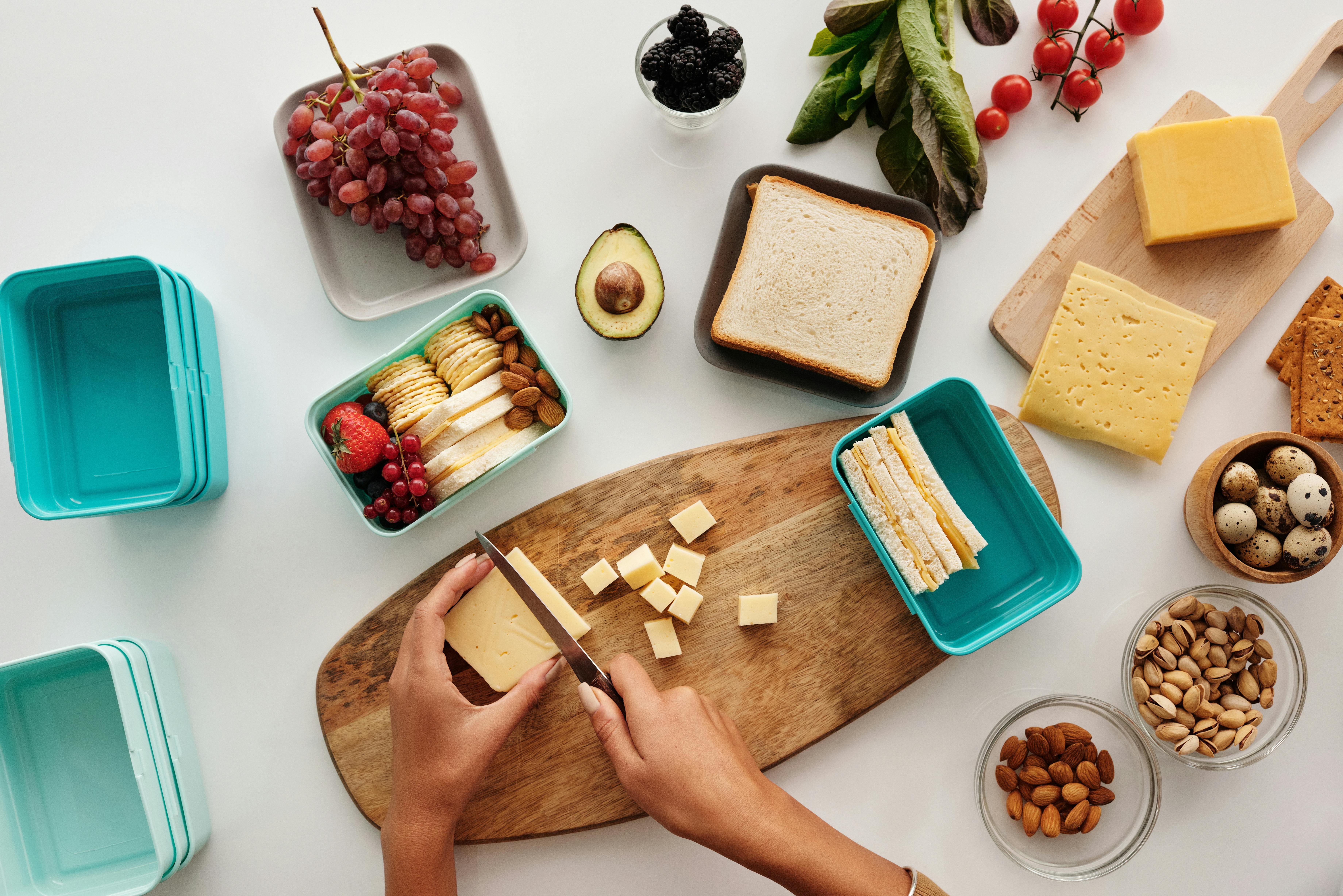
The bento box format wins for preschoolers because the separate compartments mean foods don't touch (an enormous issue for small children who can be surprisingly territorial about fruit juice touching their crackers), and there's no secondary container packing to manage. Just open the lid and eat. The best ones have two simple snap latches that a four-year-old can click open and closed on their own after a few practice runs at home.
Bentgo Kids Prints (~$30) is the most-recommended lunch box for this age across parent communities and product review sites, and for good reason. Five compartments, two snap latches, dishwasher-safe tray, BPA-free, and genuinely leak-proof across the main compartments. It handles yogurt, applesauce, and marinara without spilling into adjacent food. The tray is microwave-safe, which matters for reheating leftovers. At around $30, it is not cheap, but it lasts years and replacing the tray alone is possible if it cracks.
The OmieBox (~$35) is the only widely available bento box with a built-in thermos compartment — useful if you regularly pack warm food. The thermos is removable and insulated, holding temperature well. The trade-off is weight and complexity: more parts to clean, a tighter fit for the thermos lid, and slightly more fiddly latches than the Bentgo. If your child mostly eats cold lunches, the OmieBox is solving a problem you don't have.
The LunchBots Bento Cinco (~$40) is the stainless-steel option for parents who prefer to avoid plastic entirely. It is dishwasher-safe, durable, and the compartments are a generous size. The honest limitation: it has no insulation and is not leak-proof, so liquid-heavy foods (yogurt, sauces) need a separate sealed container inside. If your child's lunches lean dry and you care about longevity over convenience, it outlasts any plastic option.
Worth knowing: The lunch box needs to fit inside the backpack. If you are buying both at once, assemble them in the store or measure the backpack's main compartment before ordering a lunch box separately. The Bentgo Kids Prints at 9 x 6.5 x 2 inches fits inside both the Skip Hop Sparks and the Bentgo Kids Backpack without issue.
School supplies: what the list actually means
Most preschool supply lists arrive in the summer and look deceptively familiar. Here is what the items on a typical list actually require — and where budget versus brand matters.
Crayons: Get Crayola. The off-brand crayons crumble faster and require more pressure, which fatigues small hands. For preschoolers specifically, look for the Crayola My First Crayons or the standard large/jumbo size — thicker barrels are easier to grip at this age and break less easily. A 16-count box is enough; 64 colors is overkill for three-year-olds. Most programs will ask for two boxes since they share.
Markers: Crayola Washable Thick Markers. The "washable" qualifier is not optional. These will end up on hands, tables, and probably one item of clothing. The thick barrel, like the crayons, suits preschool fine-motor development.
Scissors: Fiskars 5-inch blunt-tip safety scissors (~$5). This is the specific model that most preschool teachers request by name. The spring-action version (Fiskars Spring Assisted) is worth the small premium if your child has weaker grip — it springs back open after each cut, which reduces hand fatigue dramatically during craft time.
Glue sticks: Elmer's washable glue sticks, the larger size. Buy more than the list says. Preschoolers use these enthusiastically and without restraint. A four-pack runs about $4 and will disappear faster than you expect.
Watercolor paints: Crayola 8-count Washable Watercolors. Again: washable. Non-negotiable.
Change of clothes: This item on the supply list is not optional or theoretical. Pack a complete outfit — underwear included — in a labeled zip-lock bag. Spills, bathroom accidents, and paint mishaps happen regularly. The bag lives in the backpack all term.
Labels: Buy a name stamp or pre-cut waterproof labels from a service like Mabel's Labels before the first day. Every item — backpack, lunch box, water bottle, crayons, scissors, paint set, spare clothes bag — needs to be labeled. Teachers manage 15+ children's nearly-identical gear. Unlabeled items get lost. This is not a suggestion.
What you don't need to buy
Most lists include a water bottle, and you should pack one daily, but the preschool category does not require a specialized or premium bottle. A basic BPA-free flip-straw bottle in the 12–14oz range — Contigo Kids, Nalgene Kids, or the standard Amazon Basics equivalent — works fine. The premium insulated bottles like Hydro Flask Kids or Simple Modern are genuinely better at keeping water cold, but at $20–35 versus $8–12, the price gap is hard to justify for a three-year-old who will leave it on a playground. Buy the mid-range; upgrade if it gets used well.
You do not need a separate supply caddy, a personalized pencil case, or a nap mat unless the program specifically asks for one (some do — check the list). You also do not need to buy branded or licensed character gear unless your child cares deeply about it. The licensed Paw Patrol backpack and the plain $19 Skip Hop backpack are functionally identical; the only difference is whether your child will argue about it on the first day.
Getting your preschooler ready for the routine
Separation anxiety at drop-off is often made worse by rushed mornings where gear isn't ready. The single most effective prep move is to pack the backpack the night before and establish it as your child's job, with supervision. Most preschoolers are delighted to be responsible for their own bag. Putting the lunch box in, zipping the compartment, and setting it by the door gives them ownership and reduces morning friction significantly.
Practice the lunch box latches at home before day one. Sit with your child and have them open and close the Bentgo or whichever box you've chosen, five or six times, until it's effortless. The same goes for the backpack zipper. Small hands that have never practiced are the ones that need teacher help at every meal. A ten-minute session at the kitchen table prevents weeks of cafeteria delays.
Building a consistent morning routine before preschool starts — ideally one to two weeks in advance — means that gear, drop-off, and the general cadence of school days feel familiar rather than startling by the time the real thing arrives. The backpack on the hook by the door, the lunch box in the fridge the night before: these small rituals signal to a four-year-old that school is simply what happens next, not something to be anxious about.
The honest total cost
A decent preschool setup — backpack, lunch box, core supplies, a water bottle, and a label pack — runs between $80 and $130 depending on which backpack and lunch box you choose. The Skip Hop plus Bentgo lunch box plus Crayola/Fiskars/Elmer's supplies plus a basic water bottle and label pack lands around $85–95. Going with the L.L.Bean backpack and LunchBots stainless brings it closer to $130.
The supplies themselves — crayons, markers, scissors, glue — are largely consumables. The backpack and lunch box are where it pays to spend a little more, because replacing a disintegrated $10 bag mid-year adds cost and hassle. One good backpack and one good lunch box, chosen to fit properly, should last the full preschool term and into kindergarten.
🌱 Discover Your Parenting Wellbeing Score
Get your personalised score across 9 dimensions and find articles curated for your stage.
Get My Score →Community comment
Sign in to join the conversation and share your parenting experiences.
Sign in with Google
No comments yet — be the first to share your thoughts! 💛