The Best Educational Toys for Toddlers That Don't Drive Parents Insane
Open-ended toys like blocks, puzzles, and pretend play sets consistently outperform electronic "educational" toys for toddler development.
Phase: Toddler · Topic: Baby Products · Type: Evergreen · Reading time: ~7 min
A 2015 study published in JAMA Pediatrics found that electronic toys — the ones that produce lights, words, and songs and are marketed as language-builders — were associated with less verbal back-and-forth between parents and children compared to playing with wooden blocks, shape sorters, and books. The researchers concluded there was a basis for discouraging the purchase of electronic toys that are promoted as educational and are often quite expensive. The wooden blocks don't talk back. But they also don't crowd out the conversation happening while your toddler plays with them.
That research finding is the lens through which this entire guide was written. Most of what's sold as "educational" in the toddler toy aisle is marketing. Some of it is worth buying. Here is how to tell the difference — and which specific products have earned their place in the rotation.
What actually makes a toy educational
The research on toddler play is consistent on one point: open-ended toys — ones without a predetermined correct use — produce higher-quality play than single-purpose or electronic alternatives. A decade-long study from the Center for Early Childhood Education at Eastern Connecticut State University, which observed more than 100 different toy types, found that simple, non-realistic, open-ended toys like a random set of LEGO bricks inspired the highest-quality creative play, problem-solving, peer interaction, and language development.
The reason is mechanical: an open-ended toy requires the child to generate the play. A plastic cash register that beeps when buttons are pressed mostly inspires pressing buttons. A set of wooden blocks requires a toddler to decide what to build, how to balance it, what happens when it falls, and what to build next. The cognitive load is entirely different.
This doesn't mean every toy needs to be a wooden cube in a neutral tone. It means the question to ask when buying a toy isn't "does this say it teaches something?" but rather: "does this leave room for my child to figure something out?"
The toys worth owning, by category
Building and construction
LEGO DUPLO is the closest thing to a universal recommendation in this space. The pieces are sized for toddlers from about 18 months, they click together reliably (important for a child still developing hand strength), and the play evolves with the child — stacking at 18 months becomes deliberate construction at 3 years becomes narrative building by 4. A basic DUPLO Classic Brick Box (~$35) is a better investment than most speciality sets. The Melissa & Doug Standard Unit Blocks (~$45 for 60 pieces) are worth adding from age 2: heavier and more varied in shape than DUPLO, they introduce concepts of balance and structural physics that plastic bricks don't.
For families with children over 2.5 years and the patience to supervise, Magna-Tiles (~$60–80 for a starter set) are genuinely exceptional. Magnetic construction tiles connect on every edge and face, which means children get real cause-and-effect feedback — they learn that triangles make stronger bases than squares, and that flat structures become rigid when joined at angles. The developmental value is high; so is the price. PicassoTiles are a compatible alternative at around half the cost and hold up reasonably well.
Puzzles
The research case for puzzles in toddler development is strong: they build spatial reasoning, problem-solving persistence, and fine motor control simultaneously. Melissa & Doug wooden peg puzzles (~$10–15 each) are the standard entry point for 12–18 months — large knobbed pieces, clear images, durable enough to survive genuine toddler handling. From 2 years, move to chunky jigsaw-style puzzles in the 4–6 piece range; by 3, many children are ready for 20-plus-piece puzzles. Buying a puzzle a child can solve in thirty seconds is money wasted; it should require some effort without being impossible.
Pretend play
Imaginative play is not a soft skill — it is among the most cognitively demanding things toddlers do. When a two-year-old feeds a stuffed animal "soup" from a wooden bowl, they are exercising narrative construction, theory of mind, and symbolic thinking all at once. The toys that support this best are ones with clear real-world referents that toddlers recognize from their own lives.
The Melissa & Doug Kitchen Series (wooden food sets, cutting boards, and cookware, ~$15–25 per piece) are the reliable stalwart here — the slice-and-reveal wooden foods in particular hold up to years of play and are consistently among the highest-rated toys in their age range. A simple doctor's kit and a play toolset round out the pretend-play rotation without adding clutter, and both have the advantage of reflecting activities toddlers actually observe adults doing.
Screen-free audio
The Toniebox ($110 for the player, $15–20 per Tonie character) deserves its own category because it solves a real problem: toddlers who want independent listening access to stories and music, without a screen. The child places a small figurine on top of the box to play audio — stories, songs, audiobooks — and controls volume by squeezing the box's ears. It's genuinely toddler-operable from about age 2, it supports language development through story exposure, and the library of content (including National Geographic, Disney, Paw Patrol, and original stories) is extensive. The ongoing cost of Tonie characters adds up, but Creative Tonies allow parents to record custom audio — grandparents' voices, family stories — which is a legitimately nice feature. The Yoto Player (~$100) is the competing product with a larger older-child catalogue and physical cards instead of figurines; Toniebox is easier for very young toddlers, Yoto has more longevity.
Sensory and physical play
A sand and water table (most major brands run $40–60, and cheaper versions do the job) is one of the highest-value outdoor toys for toddlers between 18 months and 3 years. It is open-ended by definition, it supports sensory exploration, it sustains attention for unusually long periods, and it requires no batteries. The Step2 Naturally Playful Sand and Water Activity Center (~$50) is a reliable mid-range option. For indoor use, a bin of kinetic sand or moon sand serves a similar purpose at lower cost and significantly higher mess potential.
The internal link here is natural: if screen-free independent play at home sounds appealing, the guide on the 30 best indoor activities for toddlers on a rainy day covers activities that pair well with all of these toys and require almost no additional materials.
The age-by-age guide
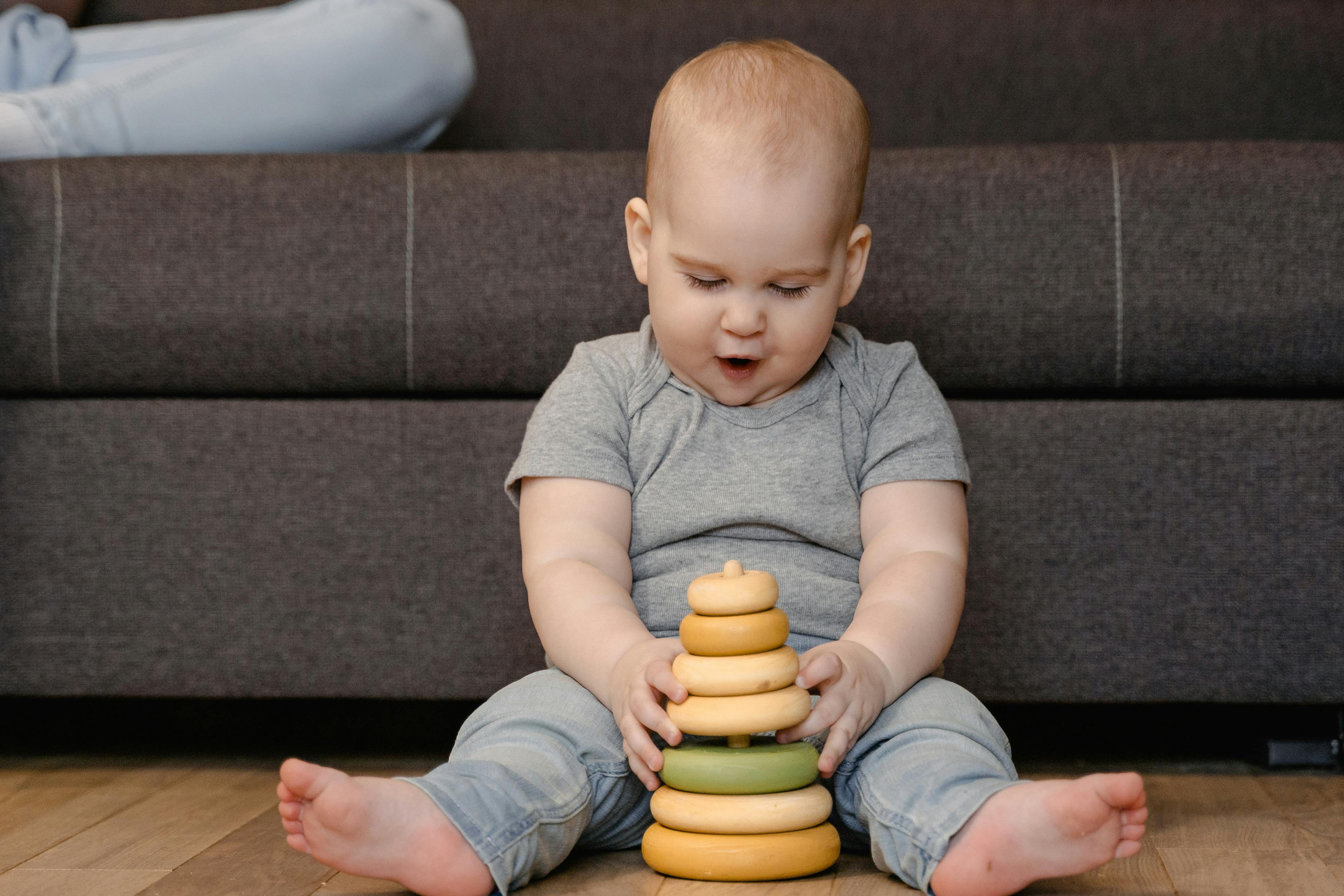
12–18 months: Focus on cause-and-effect toys (shape sorters, simple peg puzzles, stacking rings), push-and-pull vehicles, and anything that develops the pincer grasp. The Melissa & Doug Shape-Sorting Cube (~$15) is a classic for good reason — it requires problem-solving (rotating pieces to find the right slot) without being frustrating. Avoid anything with small parts or complex assembly at this stage.
18 months–2 years: Introduce DUPLO, a basic wooden block set, simple wooden puzzles with 4–6 pieces, and pretend play basics (a soft doll, a basic kitchen set). Books deserve mention here — reading aloud remains one of the highest-return activities you can do with a toddler at any age, and board books that can withstand being thrown and chewed are the most practical format. If you want to build that into a lasting habit, the guide on building a home reading habit with preschoolers covers how to make it stick well past the toddler years.
2–3 years: This is the golden age for pretend play, and the developmental return on imaginative toys is highest here. Wooden food sets, dress-up clothes, and dollhouses all flourish in this window. Magna-Tiles and more complex puzzles become appropriate. The Toniebox can be introduced now and will see regular use through age 6 or 7.
What to skip
Anything described as a "baby laptop" or "learning tablet." The JAMA Pediatrics study specifically named a baby laptop among the electronic toys associated with decreased language interaction. These products look educational. The research suggests they are not.
Toys with more than two or three sounds. One or two sounds can be genuinely engaging. Twelve sounds, each triggered by a different button, mostly teaches button-pushing. If you can't turn the volume down or off, reconsider entirely — the American Society of Testing and Materials requires toys not exceed 85 decibels at 20 inches, but toddlers don't play with toys from 20 inches away.
Single-use character toys tied to a specific show or film. These produce a brief burst of enthusiasm that evaporates when the character loses novelty. The play value is essentially zero once the association with the screen content fades. A generic animal figurine from a Schleich or Safari Ltd set (~$5–10 each) will see more use and supports more open-ended play than any licensed plastic figure.
Elaborate art supply kits. Toddlers don't need a 48-colour paint set. They need washable crayons (Crayola Washable Jumbo Crayons, ~$4), a roll of cheap butcher paper, and supervision. The kit version invariably includes materials they're not developmentally ready for, packaging they'll immediately destroy, and a cleanup project you didn't budget for.
The real goal of the toy box
The best toy for a toddler is usually the one sitting in front of them that they haven't fully figured out yet. Newness matters less than challenge, and challenge matters less than the opportunity to try, fail, and try again without adult intervention. A good toy creates the conditions for that. It doesn't need batteries, a curriculum sticker, or a licensed character on the box to do it.
If the toy your toddler is most engaged with today is a cardboard box and a wooden spoon, that is not a problem to solve. That is the research outcome working exactly as intended.
🌱 Discover Your Parenting Wellbeing Score
Get your personalised score across 9 dimensions and find articles curated for your stage.
Get My Score →Community comment
Sign in to join the conversation and share your parenting experiences.
Sign in with Google
No comments yet — be the first to share your thoughts! 💛