The Best Arts and Crafts Projects for Preschoolers (That Aren't a Disaster)
Choose open-ended, process-focused crafts over step-by-step templates, set up containment in advance, and let your child lead.
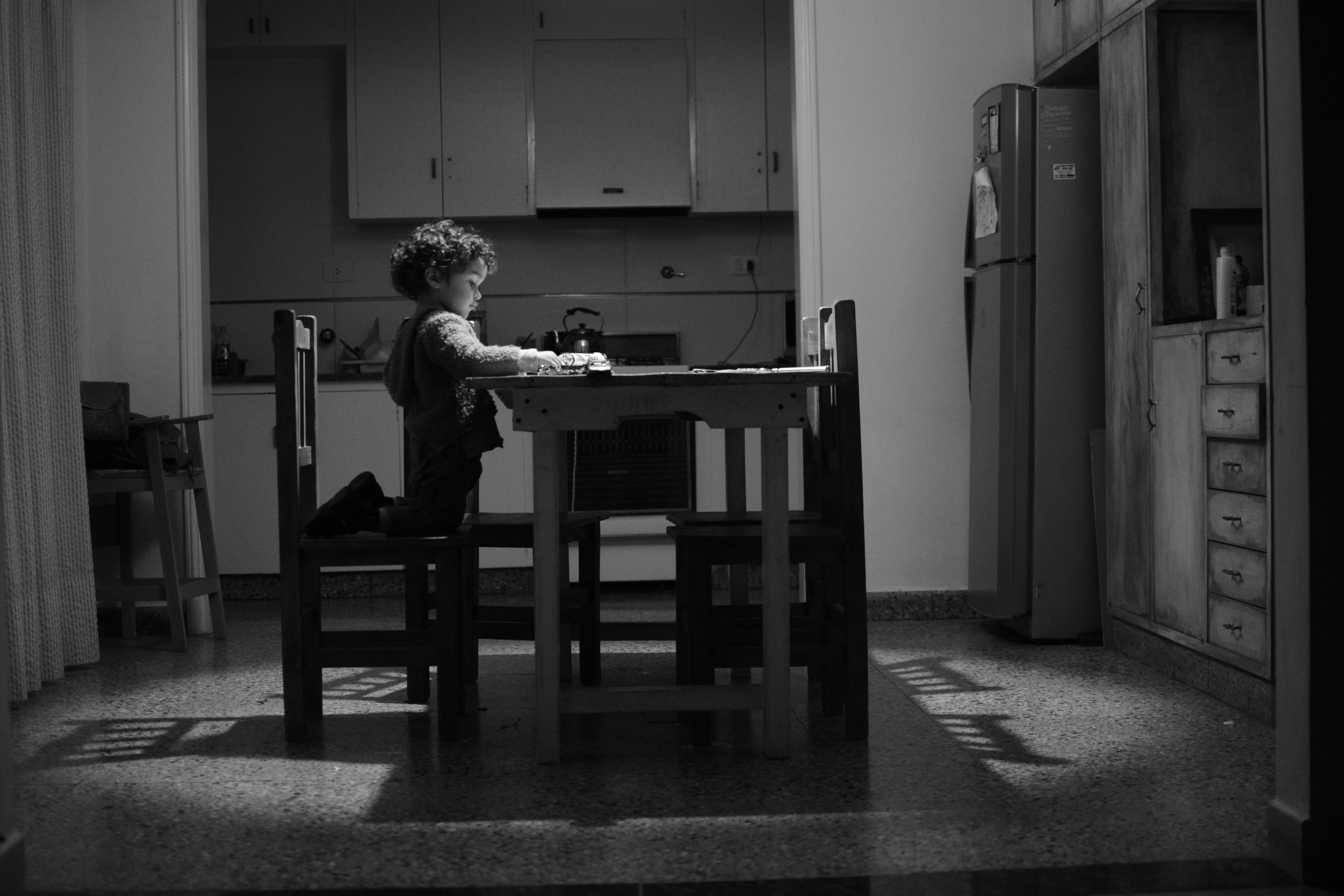
Phase: Preschool · Topic: Family Activities · Type: Evergreen · Reading time: ~7 min
The finished butterfly craft in the photo has symmetrical wings, neatly cut antennae, and what appears to be three hours of adult involvement. Your child's version will be a paper plate with paint on one side, glitter in places that defy physics, and a confident declaration that it's a horse. Both outcomes are fine. Only one of them represents your child actually making art.
Preschool crafts have a reputation problem. The internet is full of projects that look achievable but require more fine motor control than most adults have, let alone a four-year-old with limited patience and strong opinions about colors. The result is frustrated children, stressed parents, and craft supplies headed straight to the bin. There's a better approach — backed by early childhood research and requiring significantly less cleanup than it sounds like.
The distinction that changes everything: process art vs. product art
Early childhood educators draw a clear line between two types of art activities, and understanding it is genuinely useful.
Product art is what most people think of: a defined outcome you're working toward. A paper-plate sun. A handprint turkey. A Christmas wreath made from someone else's template. The adult sets up the steps; the child follows them to produce something recognizable. These look great in photos. They're also developmentally backward for this age group.
Process art is the opposite: open-ended materials, no predetermined outcome, no "right way." Paint on paper. Playdough on a table. Collage materials and glue. The experience is the point. NAEYC (the National Association for the Education of Young Children) describes process art as choice-driven and explorative — entirely the child's own — which is exactly what makes it more developmentally appropriate for three-to-five-year-olds than following a template.
As early childhood art educator Mary Ann Kohn wrote in her influential 1994 book Preschool Art: It's the Process, Not the Product: young children do art for the experience and the experimentation. The resulting piece — whether beautiful or bewildering — is only a byproduct. The benefit is the making.
This doesn't mean templated crafts are useless. A seasonal project once in a while is fine, and some children genuinely enjoy guided structure. But for a regular rainy Saturday afternoon, process art is where real engagement and real developmental benefits live.
What preschool crafts are actually building
Before getting to specific projects, it's worth knowing what's happening developmentally when a four-year-old tears paper and smears glue. Gripping a paintbrush, using child scissors, pinching small objects, squeezing a glue bottle — all of these movements build the precise hand and finger muscles that writing will later require. Research consistently links arts and craft participation in early childhood to stronger fine motor development, better hand-eye coordination, and improved grip strength by school age.
Beyond motor skills: sensory exploration (what happens when I mix red and yellow?), problem-solving (how do I get this piece to stay?), emotional expression (a four-year-old who can't yet articulate feeling overwhelmed can often communicate it through color and mark-making), and sustained attention — staying with one activity for ten minutes at this age is genuinely effortful and worth practicing.
The constraint worth keeping in mind: a three-year-old's fine motor skills are limited. They'll grip a brush in a fist, use too much glue, tear paper unevenly, and lose interest before anything looks "finished." None of this is failure — it's the developmental reality of the age. Setting up crafts that work with this reality instead of against it is the key to everyone actually enjoying the time.
Five projects that consistently work (and why)
These are specific, not vague. Each has a real setup description, an honest mess rating, and the skill it builds.
1. Watercolor resist painting
Draw shapes on white paper with a white crayon or strips of masking tape, then paint over with watercolors. The wax or tape resists the paint, revealing hidden shapes. The "magic reveal" effect holds attention reliably.
Setup: Tape paper to the table before your child sits. Use a muffin tin for paint. Limit to either warm colors (red, orange, yellow) or cool colors (blue, green, purple) — mixing both produces muddy brown quickly, which can frustrate children. Peel tape while paint is still slightly damp for the cleanest reveal.
Mess level: Low-medium. Watercolor is washable; the main hazard is the water cup tipping.
What it builds: Color mixing observation, fine motor brush control, cause-and-effect thinking.
2. Salt painting
Draw a design on dark paper with white glue, sprinkle table salt over the glue, shake off excess, then drop liquid watercolors onto the salt with a pipette. Colors spread through the salt in a way that looks genuinely spectacular.
Setup: Work on a rimmed tray to catch salt. Liquid watercolors (Colorations or Sargent Art brands work well) are more vivid than dry pan watercolors and pipette better. Have everything ready before your child sits — this project moves fast.
Mess level: Medium — salt travels.
What it builds: Scientific observation, fine motor precision (pipettes are excellent for hand strength), patience waiting for the colors to travel.
3. Collage from the recycling bin
Set out cardboard scraps, paper, tin foil, tissue paper, old magazines to tear, fabric scraps — whatever's in the recycling. Add glue sticks and a large cardboard base. Give no instructions.
Setup: This is the lowest-prep craft that exists. Pre-tear materials into smaller pieces the night before if you want shorter setup time. Let the child name the collage after they've finished — not before.
Mess level: Low. Paper scraps sweep easily; glue sticks are forgiving.
What it builds: Open-ended creativity, spatial reasoning, categorization by texture and color.
4. Homemade playdough and loose parts
Homemade playdough costs almost nothing: 1 cup flour, ½ cup salt, 2 teaspoons cream of tartar, 1 tablespoon oil, 1 cup boiling water, food coloring. Knead until smooth, cool, store in an airtight container for up to three months. Set it out with three or four types of "loose parts" — toothpicks, dried pasta, pebbles, googly eyes, pinecones — and no instructions.
Setup: Use a silicone mat or parchment for easier cleanup. Avoid too many loose part types at once; three to four options is plenty.
Mess level: Low on a mat. Playdough doesn't stain; dried pasta and pebbles collect easily.
What it builds: 3D spatial thinking, hand and finger strength from kneading and rolling, imaginative storytelling, counting and sorting.
5. Nature printing
Collect leaves, flowers, or pine cones from outside. Roll a thin layer of paint onto the object with a foam roller, then press firmly onto paper. Lift to reveal the print.
Setup: A tray lined with tin foil for the paint. Foam rollers apply paint more evenly than brushes for this technique. Do it on the porch or cover the table with something you don't care about.
Mess level: Medium — paint on hands is inevitable; the prints themselves are tidy.
What it builds: Observation of natural patterns and texture, color mixing if multiple paints are used, understanding of impression and transfer.
The setup rules that make or break craft time
The difference between a successful session and a frustrating one is almost entirely in the setup, not in which activity you chose.
Pre-portion everything before your child sits down. Squeeze paint into a muffin tin, pre-tear paper, pre-mix the playdough. A preschooler's window between eager-and-ready and already-wandering-off is short. If you're still arranging materials while they wait, you've already lost several minutes of the optimal window.
Contain the mess before it happens. A tablecloth, a shower curtain liner, butcher paper taped to the floor — any of these changes the session from chaotic to manageable. The goal isn't to prevent mess; it's to prevent it from reaching surfaces you care about. An old shirt as a smock removes clothes anxiety from both of you.
Step back once it's running. This is the hardest one. The instinct to redirect the glue going on the wrong place, to suggest a color, to fix the angle — resist it. NAEYC is consistent on this point: adult interference in process art significantly reduces its developmental benefit. If your child is happy and safe, they don't need your input. Ask open questions afterward ("Tell me about this part") rather than "What is it?" — the latter implies there should be a correct answer.
For rainy-day ideas beyond art, the 30 best indoor activities for toddlers covers sensory play, movement games, and other low-cost options that work on exactly the same chaotic afternoons.
What's actually worth buying
Most projects above use what you already have. The one purchase genuinely worth making: liquid watercolors — Colorations or Sargent Art, around $15–20 for a set. They're more vivid than pan watercolors, compatible with salt painting and the resist technique, and washable. Beyond that, a bulk pack of white cardstock, a few foam rollers, and glue sticks covers the list.
Crayola washable tempera paint in squeeze bottles is worth having for bigger painting sessions — the most forgiving of the paints for this age in terms of washability and how it behaves when applied enthusiastically and in large quantities. Which it will be. That's the whole point.
The most expensive art materials are not the most valuable at this age. A preschooler with good process art experiences and cheap supplies will develop more creatively than one with elaborate kits and an adult correcting the outcome. Set up the space, hand them the materials, and let them make what they make. The brown smear that is definitely a dragon is doing exactly the right thing.
🌱 Discover Your Parenting Wellbeing Score
Get your personalised score across 9 dimensions and find articles curated for your stage.
Get My Score →Community comment
Sign in to join the conversation and share your parenting experiences.
Sign in with Google
No comments yet — be the first to share your thoughts! 💛