The 30 Best Indoor Activities for Toddlers on a Rainy Day
Thirty concrete indoor activities for toddlers, organised by energy level and developmental benefit, with what you need and why it works.
Phase: Toddler · Topic: Family Activities · Type: Evergreen · Reading time: ~8 min
The American Academy of Pediatrics published a clinical report — reaffirmed in January 2025 — stating that play is not just beneficial for children but essential for building executive function, language, and emotional regulation. The same report notes that what toddlers need most is not elaborate equipment or structured lessons; it is time, attention, and the freedom to explore. A rainy Saturday hands you all three.
The problem isn't knowing that play matters. The problem is standing in your kitchen at 9am with a toddler who has already dismantled the toy box, and having absolutely no idea what to suggest next. These 30 indoor activities for toddlers are organised by what your child actually needs in the moment — big energy burn, focused quiet play, creative mess, or something you can genuinely do together. Each one takes under five minutes to set up and uses things you almost certainly already have.
When They Need to Move: High-Energy Indoor Activities for Toddlers
Toddlers are built to run. The AAP recommends that children aged 1–3 accumulate at least 30 minutes of structured physical activity and several hours of unstructured active play every day. Being stuck indoors does not change that need — it just changes where the running happens.
1. Tape-track obstacle course. Lay painter's tape on the floor in lines, zigzags, and loops. Show your toddler how to walk heel-to-toe along the lines, jump between circles, and spin at the X marks. Takes three minutes to make and keeps a 2-year-old occupied for twenty.
2. Balloon keep-up. Blow up two or three balloons and the rule is simple: they cannot touch the floor. Hit them with hands, elbows, heads. For a 3-year-old, give them a paper-plate bat. The frantic laughter is a bonus.
3. Indoor bowling. Line up empty plastic bottles or toilet roll tubes at the end of the hallway. Roll a soft ball. Reset together. The resetting is, genuinely, half the fun at this age.
4. Pillow-planet jumping. Scatter sofa cushions and pillows across the floor as "planets." Name each one and assign an action — jump on the red one, spin on the blue one, roar on the yellow one. It burns energy and sneaks in colour recognition at the same time.
5. Dance freeze. Put on a playlist — the Wiggles, Raffi, or whatever you can tolerate for 20 minutes — and play freeze when you pause it. Toddlers take freeze very seriously. The concentration face is worth it.
6. Sock-ball throw. Roll a pair of socks into a ball and make targets out of couch cushions or laundry baskets at different distances. Simple, free, and nothing gets broken.
7. Animal parade. Call out animals and move like them around the room. Bear crawl, frog jump, penguin waddle, snake wriggle. You will be on the floor too, which counts as your exercise.
The Best Sensory Play Activities for Toddlers (Mess Included)
Sensory play — activities that engage touch, sound, smell, and sight in an experimental way — directly builds the neural pathways toddlers need for language, fine motor control, and the ability to focus. Research published in early childhood development literature consistently links hands-on sensory exploration to stronger cognitive outcomes. Accept that the mess is the point.
8. Rice sensory bin. Pour dry rice into a deep plastic tub. Add some small cups, a funnel, and a few small toys half-buried in the rice. Your toddler will pour, scoop, and bury things for a surprisingly long time. Use a shower curtain under the tub if you care about your floors.
9. Shaving cream colour mixing. Squirt cheap shaving cream into a roasting tray. Drop two colours of food colouring into separate spots. Let your toddler swirl and mix. They will be occupied and oddly calm — the texture is soothing in a way that is difficult to explain until you see it.
10. Playdough from scratch. Mix 2 cups flour, 1 cup salt, 2 tbsp cream of tartar, 2 tbsp oil, and 1.5 cups boiling water. Add food colouring. Done in five minutes; lasts for weeks in an airtight container. Homemade playdough is noticeably softer than the shop-bought version, and toddlers prefer it. Add cookie cutters, a rolling pin, and plastic cutlery and step back.
11. Water pouring station. Fill a roasting tray with a few inches of water. Add cups of different sizes, a turkey baster, a small funnel, and some food colouring to make the water interesting. Set this up on the kitchen floor with towels underneath. The focus a toddler brings to pouring water from one container to another is extraordinary.
12. Cloud dough. Eight parts flour to one part baby oil. Mix until it holds its shape when squeezed but crumbles apart. Completely different texture to playdough — more satisfying to squish, and it does not stick to hands the way playdough sometimes does.
13. Sock texture guessing. Hide a common object — a wooden spoon, a small toy car, a rubber duck — inside a clean sock. Hand it to your toddler. Can they feel what is inside before looking? This builds descriptive language ("is it hard? is it round?") without any formal teaching.
14. Homemade rain stick. Tape one end of an empty paper towel roll, stuff a crumpled spiral of tin foil inside, pour in half a cup of dry rice, seal the other end, and hand it over. Your toddler just made an instrument and they will tilt it back and forth listening to the sound for the next ten minutes.
For more ideas on using everyday materials for developmental play, the sensory play ideas for babies and toddlers post covers the science behind why hands-on exploration matters so much in these early years.
Quiet Focus Activities: When You Need Ten Minutes of Peace
These are the activities that occupy a toddler independently for long enough that you can drink a hot coffee. No guarantees, but the odds are reasonable.
15. Sticker sorting. Give your toddler a sheet of stickers and some paper with drawn shapes or squares labelled by colour. Peeling and placing stickers is excellent fine motor work, and toddlers find it genuinely absorbing. Buy cheap sticker books — the 200-page ones from craft shops are worth every penny.
16. Pom-pom colour sort. Put coloured pom-poms in a bowl and provide a muffin tin with coloured dots in each cup. The task: sort by colour using fingers or kitchen tongs. The tongs are harder and take more concentration — use those with 2.5 years and up.
17. Lego Duplo free build. No instructions. No model to copy. Just a pile of Duplo and a toddler left to figure out what to make. The AAP specifically calls out blocks and shape sorters as among the most effective tools for early creativity and spatial reasoning — partly because they are open-ended and adult-directed play is minimal.
18. Mess-free finger painting. Squeeze paint into a zip-lock bag, seal it, tape it to a window or the floor. Your toddler pushes the paint around with their fingers through the bag. All the sensory satisfaction, none of the bath time required immediately afterwards.
19. Book basket rotation. Pull out a selection of books your toddler has not seen in a few weeks — books that have been sitting at the back of the shelf. "New" books will get more attention than familiar ones. Sit together with a big pile and let them choose. The research on shared reading and language development is unambiguous: it is one of the highest-return activities you can do with a toddler. For building this into a daily habit, building a home reading habit with preschoolers has practical strategies that start earlier than preschool.
20. Puzzle progression. Have two puzzles out at the same time — one they can do independently and one that is slightly too hard. Let them switch between the two. The slightly-too-hard one is where the real learning happens, but they need the easier one to stay regulated.
Creative and Pretend Play Activities for Toddlers
Pretend play — also called symbolic play — is one of the most developmentally significant things a toddler can do. When a 2-year-old feeds a plastic spoon to a stuffed bear or turns an empty box into a car, they are building the cognitive flexibility that underlies language, problem-solving, and eventually academic learning.
21. Blanket fort. Two dining chairs, a sheet, some clips or bulldog clips to stop it slipping. That is all. Bring a torch and some books inside. Forts are not complicated but they are transformative — the same child who refused to sit still for five minutes will happily spend twenty in a fort.
22. Post office. Save your junk mail and give your toddler a bag. Sort it, deliver it to rooms, stuff it into pots. Draw a post box on a cardboard box and have them post the letters. This will feel boring to you and extremely engaging to them.
23. Doctor's kit. A real toy doctor's kit (Fisher-Price makes a reliable one at around £15/$18) or improvised with a wooden spoon stethoscope, a sock bandage, and a notebook for prescriptions. The patient is usually every stuffed animal in the house. This kind of role play is how toddlers process their own experiences — including anxious ones like medical appointments.
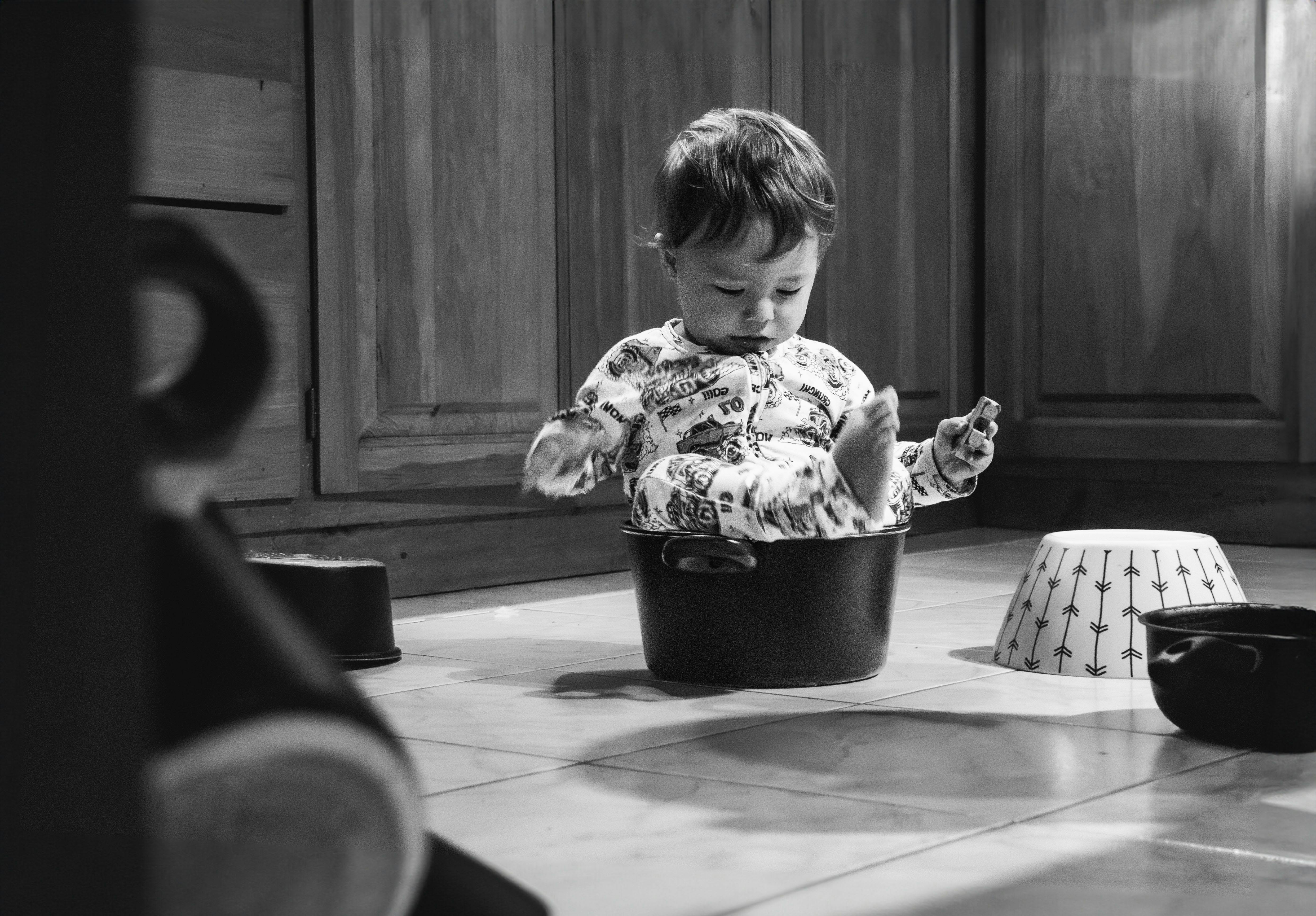
24. Kitchen band. Wooden spoons, upturned pots, plastic containers, a colander hit with a spatula. Music-making with toddlers supports rhythm, coordination, and language development. It is also loud, which is why this one appears in the creative section and not the quiet focus section.
25. Cardboard box city. Save large cardboard boxes and give your toddler some crayons and stickers. A shoebox is a house. A cereal box is a petrol station. A tissue box is a swimming pool. The building requires nothing from you except the boxes.
Activities You Can Do Together: Low-Effort, High-Connection
Sometimes the weather is miserable and what both of you actually need is not an activity — it is company. These work when you are tired and your toddler can tell.
26. Simple baking. A basic banana bread takes 10 minutes to mix and your toddler can mash the bananas, pour the flour, and stir. The outcome is not really the bread; it is 40 minutes of side-by-side focus on something real. For recipes your toddler can help with from start to finish, the toddler-friendly recipes post has meals as well as bakes.
27. Treasure hunt. Hide five small toys around the living room while your toddler waits in another room. Draw a simple map — a rectangle for the room, an X for each hiding spot. Hand them the map. The first time you do this, you will need to explain the map concept. The third time, they will want to make the map for you.
28. Grow a bean. Line a glass jar with damp cotton wool. Press a bean seed against the glass. Put it on the windowsill. That is it. Checking on the bean every morning becomes a small ritual, and when it sprouts after five to seven days, the reaction is out of all proportion to what happened.
29. Story dice. Cut six small squares of paper and draw a simple picture on each — a house, a dog, a rainy cloud, a car, a tree, a hat. Stack them face down. Each person picks one and adds it to the story. Your 2-year-old's contributions will be mostly non-sequiturs ("and then the dog... WET") and that is entirely the point.
30. Cloud watching from the window. This sounds unambitious enough that you might skip past it. Do not. Lie on the floor next to your toddler and look out at the grey sky together. Name shapes if there are any. Talk about where the rain comes from. It is slow and quiet and requires nothing from either of you — which, some rainy days, is exactly right.
One Thing Worth Knowing Before You Start
The single most common mistake on a stuck-inside day is attempting too much. You do not need to work through a list of ten activities. Research on toddler attention and engagement consistently shows that one absorbing activity done well — with a parent who is actually present, not half-watching their phone — is worth more than six half-hearted ones.
Pick two or three from this list that match what your toddler needs right now. Set one up, step back, and see what happens. The rainy day is not a problem to solve. It is a Tuesday with better atmospheric conditions for staying home.
Worth knowing: The AAP recommends that toddlers aged 1–3 get at least 30 minutes of structured physical activity daily, alongside several hours of free unstructured movement. A full indoor day does not have to mean a sedentary one — the movement activities in the first section above can cover that 30 minutes before lunch.
🌱 Discover Your Parenting Wellbeing Score
Get your personalised score across 9 dimensions and find articles curated for your stage.
Get My Score →Community comment
Sign in to join the conversation and share your parenting experiences.
Sign in with Google
No comments yet — be the first to share your thoughts! 💛