Cozy Winter Activities for Toddlers That Cost Almost Nothing
Free and low-cost winter activities for toddlers that work both indoors and outside, with the layering basics that make cold-weather outings survivable.
Phase: Toddler · Topic: Family Activities · Type: Seasonal – Winter · Reading time: ~6 min
The single biggest myth about winter with a toddler is that you need to buy your way through it. Activity kits, subscription boxes, holiday craft sets — the implication is that a decent January requires a shopping list. It does not. The activities that hold a toddler's attention longest are almost always the ones involving things already in your kitchen: a bag of flour, a bowl of water, a cardboard box, a wooden spoon.
This post covers the free and nearly-free winter activities that actually work — split between indoors (for the truly miserable days) and outside (because the science is clear that fresh air in winter is genuinely good for toddlers, and the barrier is usually just the faff of getting dressed for it).
Why Going Outside in Winter Is Worth the Faff
Parents and carers consistently report that the hardest part of winter outdoor play is not the cold — it is dressing the child. Fair. But the payoff is real enough to be worth knowing: public health researchers consistently note that winter illness spreads primarily indoors, where recycled air circulates germs through heating systems. Short bursts of outdoor time reduce exposure, not increase it.
There is also the mood argument. The California Childcare Health Program notes that outdoor play — even in cold weather — gives toddlers an opportunity for gross motor movement and a change of environment that indoor play cannot replicate. A toddler who has spent twenty minutes outside on a cold afternoon is measurably calmer inside for the rest of it.
The AAP's rule for dressing young children in winter: one more layer than you are wearing. That means a thermal base layer, a warm mid-layer (fleece or wool), and a waterproof outer layer. Mittens over gloves — easier to get on, warmer for small hands. One practical note: remove bulky coats before putting a toddler in a car seat. The puffiness creates dangerous slack between the harness and the child. A thin fleece under the harness, coat on top, is the safe approach.
One more thing worth saying plainly: scarves and hood drawstrings on toddler clothing are a strangulation risk. Use a neck warmer or snood instead of a scarf, and cut or tie back any hood strings before they head out.
Free Outdoor Winter Activities for Toddlers
Shadow tracing. On a sunny winter morning, low sun creates long, dramatic shadows. Take chalk or a stick and trace your toddler's shadow on paving or packed snow. Trace yours. Come back twenty minutes later and see how they have moved. This is the most natural introduction to the concept that the earth turns — and it cost nothing except going outside.
Snow sensory play with sand toys. Your summer sand toys — buckets, moulds, scoops — work perfectly in snow. Pack snow into a bucket and turn it out like a sandcastle. Fill a mould with snow and see if it holds its shape. Toddlers who have never experienced snow approach it with the same absorption they bring to a sensory bin, because that is essentially what it is.
Nature scavenger hunt. Winter strips trees back and makes the landscape legible in a new way: bark patterns, seed pods, birds' nests, lichen. Write or draw a short list of five things to find before heading out. A stick. Something brown. Something that crunches. A bird. Ice. There is no failure condition in this game, which matters enormously at this age.
Puddle and ice investigation. If there is a puddle that has frozen overnight, your toddler will find it before you do. Let them stamp on it, prod it with a stick, pick up a piece and hold it until it melts in their hand. This is hands-on science about states of matter — solid, liquid, and the temperature that moves between them — presented in the most direct possible way.
Feeding birds. Hang a simple bird feeder (a pine cone rolled in peanut butter and birdseed, hung with string, costs under a dollar to make) from a tree or window. Then watch. A 2–3 year old who has made the feeder has a personal stake in who arrives. Identifying two or three common garden birds by sight is genuinely achievable at this age, and the quiet observation required is its own form of focus practice.
Free and Low-Cost Indoor Winter Activities for Toddlers
Baking soda snow. Mix two cups of bicarbonate of soda with two tablespoons of hair conditioner until it holds its shape when squeezed. It is cold to the touch, slightly sparkly, and moulds exactly like wet sand. Total cost: the conditioner, since most kitchens have bicarbonate. Add small plastic animals and let them play in the snow for as long as the batch lasts.
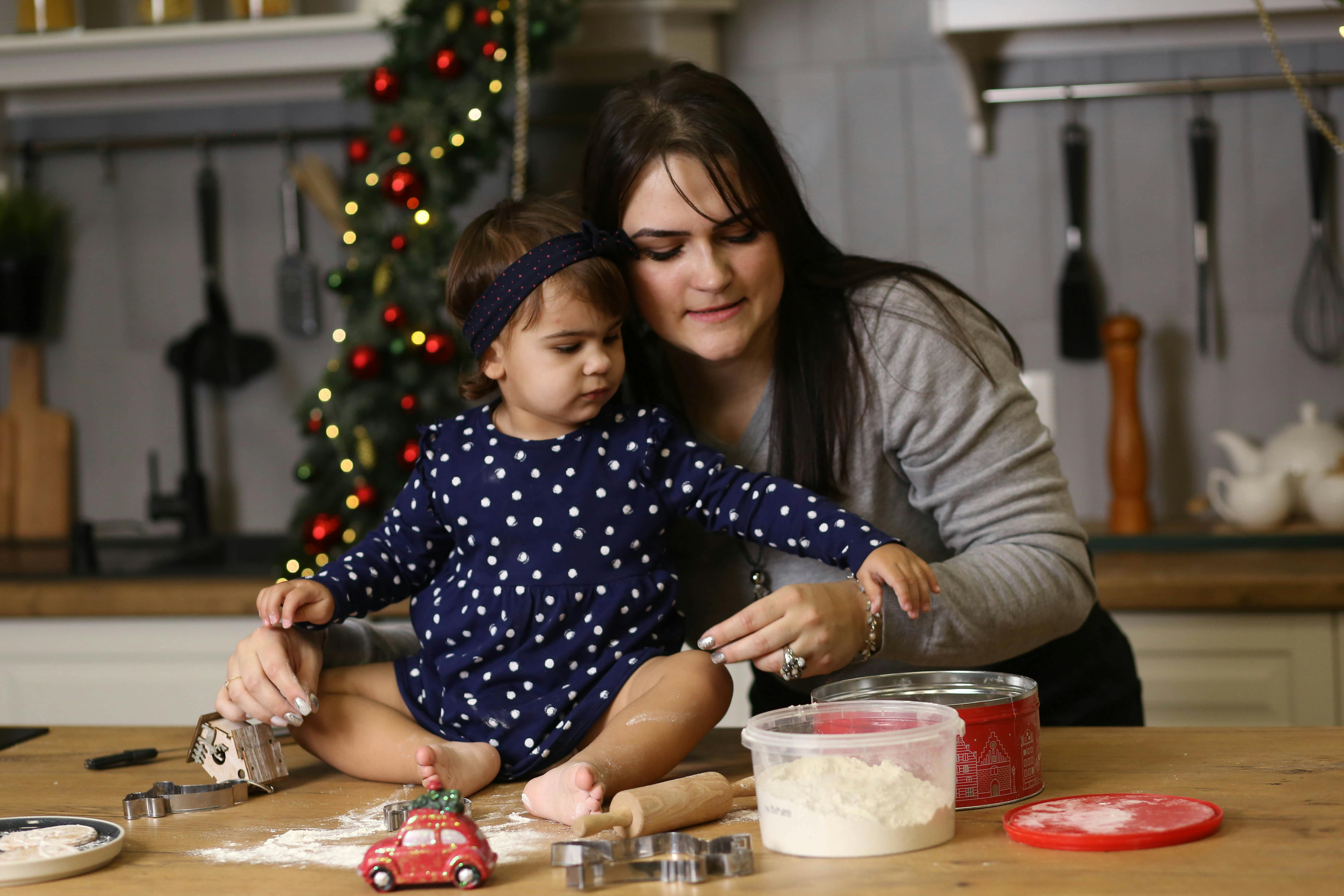
Homemade playdough. The classic. Two cups plain flour, one cup salt, two tablespoons cream of tartar, two tablespoons vegetable oil, and one and a half cups of boiling water with food colouring stirred in. Mix and knead. Done in ten minutes; lasts for two weeks in a sealed container. Add cookie cutters, a rolling pin, a plastic knife, and muffin tin liners for a full session. The toddler-friendly recipes post notes that kitchen involvement at this age builds genuine confidence — playdough making is the entry point.
Cotton-ball snowstorm. Give your toddler a bag of cotton balls, a pair of child-safe tongs, and a set of empty egg cups or muffin tins. The task: move every cotton ball from the bag to a cup using the tongs. This is one of the most effective fine motor activities for toddlers, and it costs the price of a bag of cotton wool. For a 3-year-old, use smaller tongs. For a 2-year-old, fingers are fine — the sorting is the point.
Cardboard box igloo. Collect large cardboard boxes over a few weeks and construct a small den by cutting windows and a door. Your toddler helps by handing you tape, pushing the boxes into place, and decorating the outside with stickers or marker. The construction is an afternoon. The playing inside it lasts days. A torch inside turns it into a full experience.
Blanket fort reading. Two dining chairs and a sheet, a pile of books, and a small lamp or battery torch. Winter is one of the highest-return seasons for building a reading habit — the cold outside makes the inside feel genuinely cosy and contained, and a fort concentrates that feeling. For a practical framework on how to build a daily reading habit at this age, building a home reading habit with preschoolers has the specifics that transfer from toddler years.
Frozen animal rescue. Freeze small plastic animals in a container of water the night before. In the morning, give your toddler a small jug of warm water, a paintbrush, and some salt. The mission: rescue the animals. Salt melts ice faster — which is surprising and slightly magical at this age. This is the same ice excavation logic from summer, reframed for winter with a narrative that keeps a 3-year-old invested for half an hour.
Indoor obstacle course. Sofa cushions on the floor, a line of masking tape to balance on, a tunnel made from a large cardboard box with both ends cut out, a pile of pillows to jump into. This addresses the gross motor need that cold weather interrupts — and it costs nothing beyond five minutes of rearranging furniture. Penn State Extension put it plainly: toddlers need to run, jump, and wiggle in winter just as much as in July.
The One Indoor Activity That Survives Even the Longest February
Sensory play in winter has a quality that summer sensory play does not: the contrast. Coming inside to warm hands on something soft and textured — playdough, cloud dough, a warm water sensory bin — feels particularly good after cold outdoor play. The best version of a winter day with a toddler is not a marathon of indoor activities. It is a short spell outside, a warm drink and snack on return, and then one absorbing indoor activity while the heating does its work.
That rhythm — outdoor, warm up, play — is also the simplest antidote to the cabin fever that genuinely does set in around week six of grey skies. The restlessness parents report in late winter is not just the toddler's; it is theirs. Getting outside for even fifteen minutes, cold as it is, resets something in both of you.
Worth knowing: For rainy or grey winter days when the cold is genuinely prohibitive, the 30 best indoor activities for toddlers on a rainy day covers the full range — including the high-energy activities for when your toddler has been inside since Tuesday.
Winter does not require a plan. It requires a coat, a willingness to be briefly cold, and the knowledge that the baking soda has been sitting in your kitchen cupboard this entire time.
🌱 Discover Your Parenting Wellbeing Score
Get your personalised score across 9 dimensions and find articles curated for your stage.
Get My Score →Community comment
Sign in to join the conversation and share your parenting experiences.
Sign in with Google
No comments yet — be the first to share your thoughts! 💛