Raising a Strong Reader: What Parents Can Do at Every Age
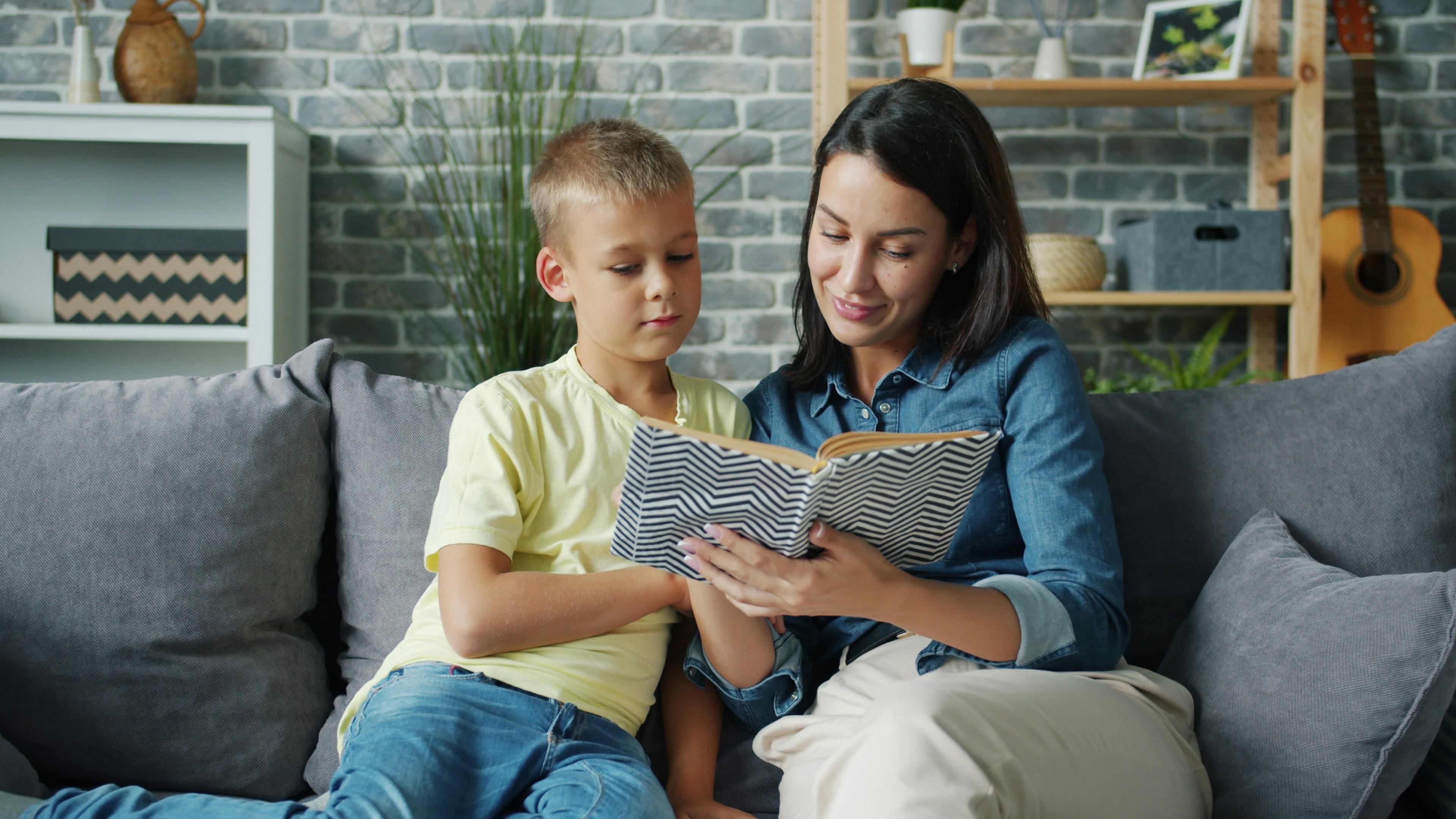
The single most powerful thing parents can do at any age is keep reading aloud — even after kids can read independently — because it sustains love and vocabulary simultaneously.
Phase: School-Age · Topic: Schooling Advice · Type: Evergreen · Reading time: ~8 min
At age 8, 57 percent of children say they read books for fun most days. By age 9, that number drops to 35 percent. The publishing industry calls it the "Decline by 9," researchers call it a crisis point — and the reason it matters is that the age when most children lose the reading habit is precisely the age when the research suggests lifetime readers are made or lost.
This is not a screen time problem. The decline in reading for pleasure started before smartphones were ubiquitous and accelerated sharply during the pandemic. It is a problem of what reading feels like to children once it stops being a shared activity with a parent and becomes a school performance metric.
The good news: the actions that prevent this decline are simple, almost entirely within a parent's control, and work regardless of whether your child is a naturally enthusiastic reader or the kid who would rather do almost anything else.
What the research says every parent should still be doing — and most aren't
The American Academy of Pediatrics recommends reading aloud to children from birth. Most parents know this for babies. Far fewer know that the recommendation doesn't expire when a child learns to decode words independently.
A 2019 study from Ohio State University found that children whose parents read to them five times daily during early childhood hear approximately 1.5 million more words by age five than children who were not read to — the "million-word gap." More importantly for school-age children: reading aloud is not just vocabulary delivery. It is the primary mechanism through which children encounter language above their current decoding level.
Research from UC Santa Cruz found that picture books contain two to three times as many uncommon words as adult conversation. Chapter books and novels read aloud to a 7-year-old include complex sentence structures, sophisticated vocabulary, and narrative techniques that the child could not access independently for several more years. When a parent stops reading aloud because "she can read herself now," they are cutting off the richest source of language input available at exactly the age when vocabulary growth matters most.
Reading aloud to school-age children also sustains the emotional association between books and closeness — and it is that association, more than any skill-building activity, that determines whether a child becomes a lifelong reader. Just 15 minutes a day is enough to make a measurable difference, according to literacy researchers at the University of Rochester.
Ages 0–5: building the foundation before formal reading begins
Reading with very young children is almost entirely about language, not literacy mechanics. The goal is not to teach letter-sound correspondences at age two — it is to build the oral vocabulary and love of narrative that will make decoding worth the effort later.
For babies from birth to 18 months, the content of what you read matters less than the rhythm and interaction around it. Board books with faces, simple objects, and lift-the-flap features invite touching and response. Pointing to pictures, asking "where's the dog?", and responding to whatever the baby does are building language connections that show up years later as reading comprehension.
For toddlers and preschoolers, repetition is not boring — it is brain-building. A child who wants to read The Very Hungry Caterpillar for the fortieth time is practising prediction, sequence, and word recognition in a way that serves reading development. Following the words with a finger as you read them creates a connection between spoken sounds and written symbols.
The most important preschool reading habit is the simplest: have books everywhere, make them physically accessible, and let the child see you reading for pleasure. Children who grow up in homes with books (research suggests even 20 books in the home makes a measurable difference) have significantly better literacy outcomes — not because the books are magical, but because they signal that reading is something adults do for themselves.
For specific strategies on building a reading habit before school, building a home reading habit with preschoolers covers the practical setup in detail.
Ages 5–8: the learning-to-read years
The early elementary years are where decoding is taught and practised, and this is also the period when many children encounter reading as effort rather than pleasure. The work of sounding out words is genuinely hard. Some children find it joyful; many find it exhausting.
The most important thing to understand about this stage: children's reading level and their intellectual and emotional readiness for stories are not the same thing. A 6-year-old who can decode at a first-grade level is perfectly capable of understanding and enjoying stories written for 8-year-olds — if someone reads them aloud. Maintaining a dual track here is powerful: encourage independent reading of books at or slightly below their current level (where fluency and confidence grow), while continuing to read aloud from books considerably above it.
For independent reading, books with series momentum are exceptionally useful. When a child finishes one book and immediately wants the next, they are practising volume — and volume is how fluency develops. The Dog Man series (Dav Pilkey) and Diary of a Wimpy Kid (Jeff Kinney) are perennially effective for reluctant or developing readers in this age range precisely because the combination of visual elements and short chapters makes the reading experience feel manageable and rewarding. The Magic Tree House series (Mary Pope Osborne) works well for children who respond to adventure and fact-based narrative.
For read-alouds with 5–8-year-olds, the Harry Potter series remains one of the most reliably successful chapter book choices across a wide range of children — the first two books in particular are calibrated well for this age group. Charlotte's Web (E.B. White), James and the Giant Peach (Roald Dahl), and The Mouse and the Motorcycle (Beverly Cleary) are consistent multi-decade performers.
Ages 8–11: the danger years — and what actually prevents the drop
The age 9 decline in reading for pleasure is the most important inflection point in a child's literacy development. Understanding why it happens is the first step to preventing it.
At this age, reading becomes associated with school performance: assigned books, reading logs, comprehension worksheets, AR points. For many children, what was previously a source of pleasure becomes a task to be completed and assessed. Simultaneously, the books that are "approved" at school feel very different from the content that children actually find gripping — sports, horror, humour, graphic novels, narrative nonfiction about real events.
The most effective intervention for 8–11-year-olds is consistent access to books they choose. Research on independent reading is clear: children read more, read better, and retain more vocabulary when they choose their own reading material. The content is almost irrelevant. A child who reads 10 Diary of a Wimpy Kid books is building more reading stamina and vocabulary than a child who reads two assigned novels with difficulty.
Practical strategies that work at this stage:
- Regular library visits where the child selects without parental direction (a parent who steers every selection is removing the ownership that makes choice meaningful)
- Graphic novels count. Smile and Drama (Raina Telgemeier), Big Nate (Lincoln Peirce), and Dog Man are not lesser forms of reading — they contain genuine narrative structure and vocabulary, and they bring in children who would otherwise read nothing
- Magazine subscriptions oriented to the child's interest (sports, animals, science, gaming) maintain the reading habit without requiring book-length commitment
- Audiobooks count. A child listening to Hatchet by Gary Paulsen while following along or while in the car is building comprehension, vocabulary, and a love of narrative. The format is not a shortcut — it is a different delivery mechanism for the same cognitive activity
- Continuing to read aloud — even at this age, even books the child could read alone — sustains the shared experience that keeps books feeling like something enjoyable rather than something assigned
Worth knowing: Summer is the most dangerous period for the reading habit. Research suggests students can lose up to two months of reading proficiency over a single summer, and more than two-thirds of the reading achievement gap between struggling and proficient 9th-grade readers traces back to cumulative elementary-school summer learning loss. Four to six books read over summer — any books, in any format — is enough to prevent measurable decline. The local library's summer reading programme is not just a nice activity; it is an evidence-based intervention.
Ages 11–14: re-engaging the student who has already stopped reading
If your child has already drifted away from reading by middle school, the instinct to assign better books or increase expectations is almost always counterproductive. The reader who stopped at 11 needs a lower-pressure re-entry than the reader who never stopped.
What works: start with format, not content. Audiobooks and graphic novels are not stepping stones to "real" reading — for many reluctant middle schoolers, they are the re-entry point that restores the association between stories and pleasure. The Diary of a Wimpy Kid series, graphic novel adaptations of well-known books (The Babysitters Club, Hilo), and narrative nonfiction in accessible formats (I Survived series by Lauren Tarshis) all have strong track records with students who describe themselves as non-readers.
Finding the intersection of the child's existing interests and available reading material is more effective than any general reading recommendation. A child obsessed with football who reads the autobiography of a footballer, or a gaming-obsessed child who reads about the history of video games, is building the same reading brain as a child working through a classic novel — with significantly higher motivation.
For guidance on sustaining reading as screens compete for attention, how to raise kids who love to read in a screen-first world covers the specific challenge of middle-school reading in the digital age.
The thing that matters most at every age
The single consistent finding across decades of reading research is that children who grow up seeing adults read for pleasure are more likely to read for pleasure themselves. Not reading to the child, not assigning reading, not rewarding reading — modelling it.
A parent who reads in front of their child, who talks about what they are reading, who brings books back from trips, who visits the library with genuine interest, is doing more for their child's long-term literacy than any flashcard programme or reading app. The habit is transmitted, in the end, by example more than instruction.
The books change at every age. The basic act — picking one up, sitting down, getting absorbed — stays the same.
🌱 Discover Your Parenting Wellbeing Score
Get your personalised score across 9 dimensions and find articles curated for your stage.
Get My Score →Community comment
Sign in to join the conversation and share your parenting experiences.
Sign in with Google
No comments yet — be the first to share your thoughts! 💛