The Ultimate Summer Bucket List for Families With Kids Ages 5–12
Mix big-event anchors with free-range afternoons and let kids co-own the list — the best summer memories come from both.
Phase: School-Age · Topic: Family Activities · Type: Seasonal – Summer · Reading time: ~6 min
Research into how adults form childhood memories points to something counterintuitive: what makes a summer feel long and rich isn't filling every day with planned activities — it's novelty. New experiences, however small, create more distinct memories than repeated routines. That's the science behind why a random Tuesday afternoon catching fireflies can feel more vivid in your child's mind twenty years later than an expensive theme park trip they've done before.
A summer bucket list works for exactly this reason: it's a low-pressure structure that invites novelty without scheduling every hour. Here is one built specifically for kids aged five to twelve — old enough to remember it, young enough that most of it costs almost nothing.
How to use this list without making it a project
The trap with bucket lists is turning them into homework. The goal is a list you can glance at on a slow Tuesday, pick something, and go — not a productivity system with tracking spreadsheets.
The approach that works best: make the list together before summer starts, with everyone contributing at least two ideas. Post it somewhere visible (the fridge, a chalkboard). Don't schedule items in advance. Instead, when you hear "I'm bored," that's your trigger to pull out the list and pick something that fits the day. Some families mark completed items with stickers; others just cross them off. The ritual of checking something off is genuinely motivating for most school-age children.
One practical note on summer learning: research from NWEA and the Harvard Graduate School of Education suggests that without any practice, kids can lose meaningful ground in maths over the summer — reading is more durable, but maths skills are procedural and fade faster. Several items on this list sneak in enough real-world number sense to matter: cooking, gardening, measuring for a building project. That's not the point of the list, but it's a useful side effect. For families who want to do more, the post on raising a strong reader covers low-effort ways to keep reading momentum through the summer months.
Water and outdoors (free or nearly free)
The best summer activities are almost always wet, muddy, or both.
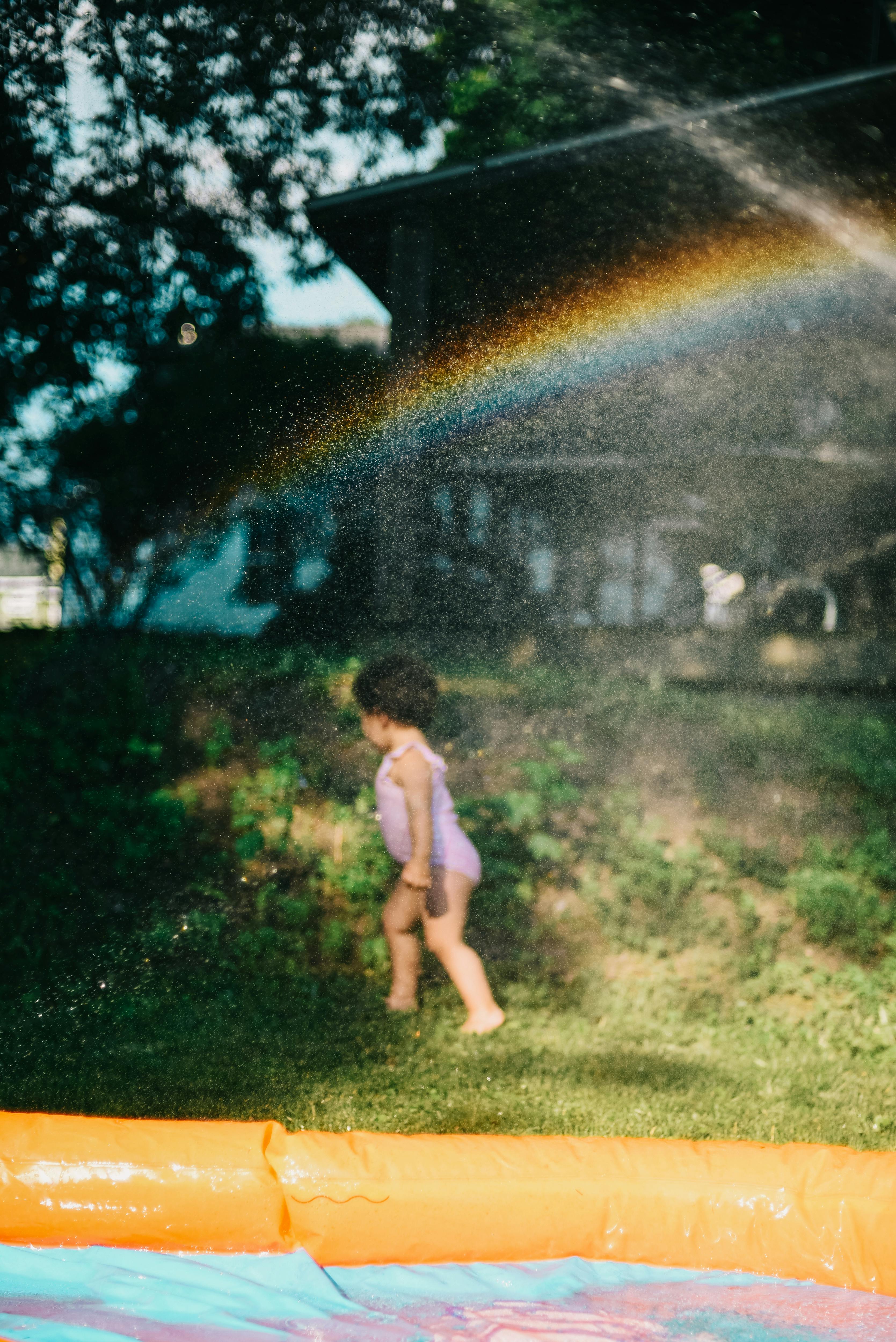
Run the sprinkler after dinner when the air is still warm but the direct sun has eased. For ages five to eight, this is inexplicably as exciting in August as it was in June.
Build a backyard obstacle course using items you already own — a hose, chalk lines, a bucket to throw a ball into, two chairs to crawl under. Let the kids design it, time each other, and redesign. This reliably occupies ninety minutes with zero adult involvement after setup.
Find one new hiking trail — not necessarily a hard one, but one your family hasn't done. The AllTrails app has a solid free tier with user reviews that often flag whether a trail is genuinely manageable for younger children. A trail with a destination (a waterfall, a viewpoint, a specific tree) is always more motivating than one that just goes through trees.
Catch fireflies at dusk if you live in a region where they appear. A clean jar with a loose-fitting lid, released before bed. The experience of standing in the garden as it gets dark, watching the first ones appear, is one of those genuinely irreplaceable summer moments.
Have a proper water balloon fight — the kind with actual buckets pre-filled, enough for everyone, where nobody runs out after forty-five seconds. For an eco-friendlier version, sponge bombs (cut a kitchen sponge into strips, bundle and tie them with a rubber band) refill in a bucket and last all afternoon.
Creative and imaginative (rainy-day friendly)
Put on a backyard show. Write a script, assign roles, make costumes from whatever is available, sell "tickets" to the other parent and any willing neighbours. The process matters more than the performance.
Set up a lemonade stand — the real version, with a sign they made, a price they decided, and change they handle themselves. For children aged eight and up this is a surprisingly good introduction to the basics of how selling something actually works. For a deeper approach to teaching kids about money, the age-by-age guide covers the next steps after the lemonade stand phase.
Make homemade ice cream without a machine. A double-bag method — ice cream mixture in one zip-lock bag, ice and salt in a larger one, shake for eight minutes — works for ages six and up and produces actual ice cream. The shaking part is physical, cold, and slightly chaotic, which is exactly right.
Start a summer journal — not a diary with mandatory daily entries, but a scrapbook where kids tape in a feather from the hike, a wrapper from the farmer's market, a photo printed at a drugstore. Something physical to hold at the end of August.
Big experiences (one or two per summer)
These are the anchor events — the ones that, as Popular Science research on childhood memory suggests, generate the richest and most durable recollections because they're genuinely novel.
Visit a place you've never been, even if it's local: a neighbouring town's farmers' market, a state park two hours away, a museum in a genre your family hasn't explored (natural history, science, art). The specific destination matters less than whether it's new territory.
Go camping overnight, even badly. A first camping trip with an eight-year-old doesn't need to go smoothly to be remembered fondly. For families completely new to it, the guide to planning your first family camping trip covers gear and logistics without assuming any prior experience.
Attend one live outdoor event: a minor league baseball game, a free concert in the park, a county fair, a fireworks display. The communal, outdoor, slightly unpredictable nature of these events is the point — it's a different kind of experience than anything that happens indoors.
Slow and intentional (the ones that don't look exciting)
These items tend to get skipped in favour of bigger activities, which is a mistake. They're often the ones kids mention when they're older.
Watch a meteor shower. Check the dates in August for the Perseids — one of the most reliable and spectacular annual showers, visible with no equipment. Set an alarm for 11pm, take everyone outside on a blanket, and wait. For most children this is the first time they've genuinely experienced the night sky as something that happens to them.
Cook one full meal together, with children doing the steps rather than watching. Something with actual components — homemade pizza with yeast dough, tacos with everything made from scratch, pancakes in shapes. The goal isn't a perfect meal; it's the hour of shared attention.
Have a deliberate slow day. No plans, no screens, no scheduled fun. A lot of parents are frightened of these days, but children aged seven and older who are given genuine unscheduled time — not time with a hidden agenda — tend to find something interesting to do within twenty minutes. The boredom is doing something.
Making it theirs
The lists that get completed are the ones kids feel ownership of. Before summer starts, sit down and ask each child: What's one thing you've never done that you want to try this summer? What's one thing you want to do again? Add those answers to the list without editing them.
A seven-year-old who contributes "make a zip line in the garden" and helps problem-solve whether that's actually possible is invested in the summer in a way a seven-year-old handed a pre-made list is not. Some of the best items on your list will come from this conversation.
The summer doesn't need to be optimised. It needs to be remembered.
🌱 Discover Your Parenting Wellbeing Score
Get your personalised score across 9 dimensions and find articles curated for your stage.
Get My Score →Community comment
Sign in to join the conversation and share your parenting experiences.
Sign in with Google
No comments yet — be the first to share your thoughts! 💛