Water Play Activities for Toddlers That Keep Them Cool and Entertained
Twenty water play activities for toddlers that cool them down, build real developmental skills, and can be set up in under five minutes.
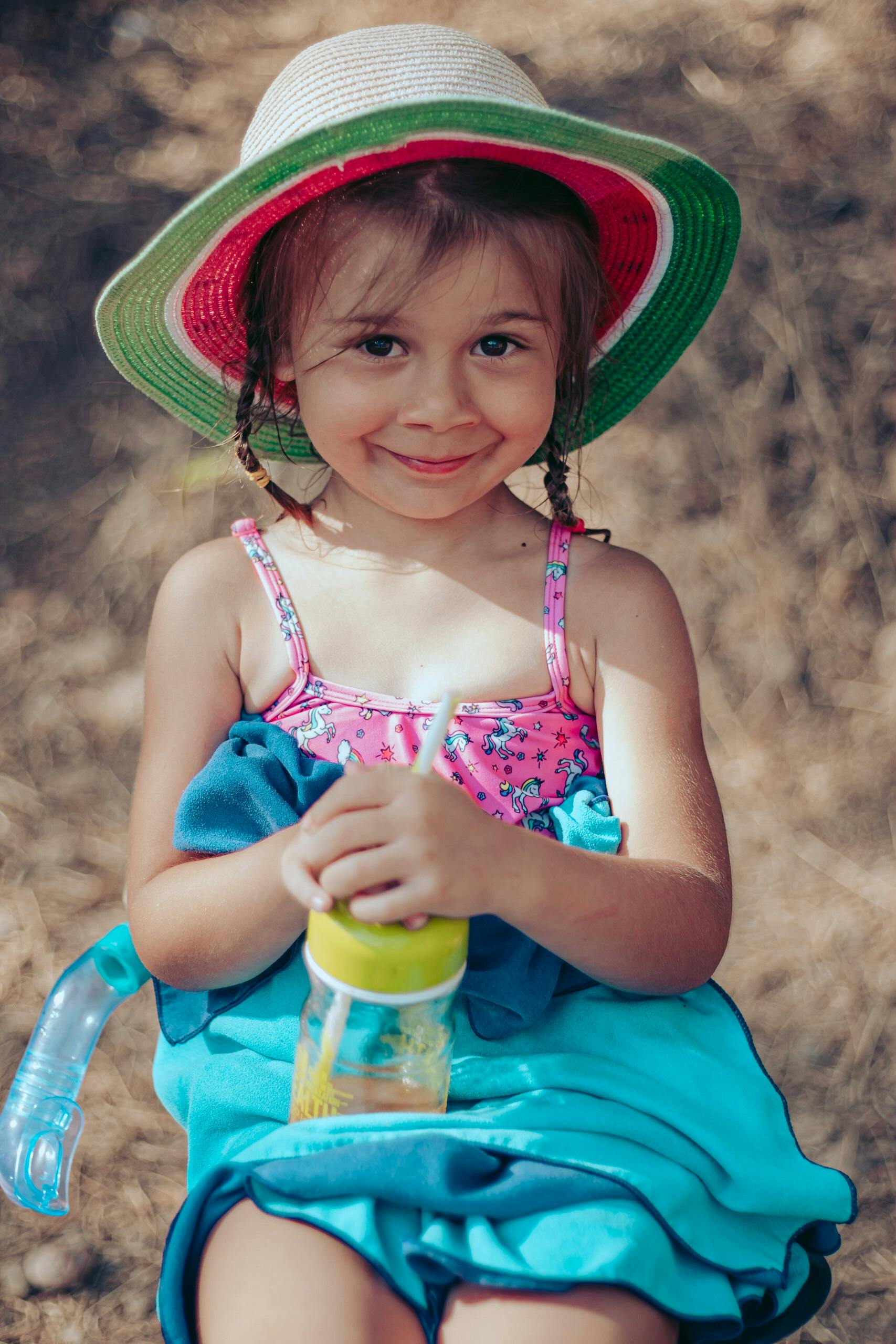
Phase: Toddler · Topic: Family Activities · Type: Seasonal – Summer · Reading time: ~7 min
The science behind water play is more interesting than most people expect. Research published in Healthcare in 2024 found that water-based activities support motor development in children under twelve months. For toddlers, those benefits keep stacking: a study cited by the National Association for the Education of Young Children found that regular water play can improve language development by around 25% in the preschool years — partly because it gives children something genuinely interesting to describe while they're doing it.
That is good justification for what most parents already suspect: when a toddler discovers a bucket and a hose, something real is happening in that brain. This is not passive entertainment. The pouring, the overflowing, the sinking rubber duck — these are early science experiments, and your toddler is running them.
Here are 20 water play activities that will keep them cool and occupied all summer, along with the one equipment purchase that is genuinely worth making and the safety basics that cannot be glossed over.
Before Anything Else: The Safety Essentials
This belongs at the top, not tucked at the bottom as an afterthought.
The AAP's drowning prevention policy — reaffirmed in December 2024 — states that whenever toddlers are in or around water, an adult with swimming skills should be within arm's reach, providing constant "touch supervision." That phrase is deliberate: not watching from across the yard, not glancing over from a phone. Within arm's reach, attentive, the whole time. Drowning is rapid and often silent, and it can happen in fewer than two inches of water.
Two practical rules that follow from this: empty every container — paddling pool, water table, bucket, sensory tub — immediately after each session. And during garden parties or gatherings where adults are distracted, designate one person explicitly as the water watcher before play begins. Passing that responsibility to nobody in particular is how accidents happen.
Beyond water safety: the AAP advises limiting outdoor toddler play when the heat index climbs above 90°F (32°C), scheduling active time in the early morning or after 3pm to avoid peak UV hours, and building in regular shade breaks and water breaks regardless of whether your child says they are thirsty. Toddlers are notoriously bad at self-reporting heat discomfort.
Sun protection checklist before heading out: SPF 30+ sunscreen applied 15 minutes before exposure (reapply every two hours), a wide-brimmed sun hat, and loose light-coloured clothing or UV-protective swimwear. The water amplifies UV exposure by reflection.
The One Piece of Equipment Worth Buying
A water table is the closest thing to a guaranteed toddler success in summer. The Step2 Rain Showers Splash Pond (around $110/£90) remains the benchmark: it has a tiered design with a waterfall feature that keeps the water moving, plus a rack of accessories — cups, funnels, scoops — that give toddlers something to actually do rather than just stand and splash. It converts to a sand table in autumn. At roughly $35–$45, the Little Tikes Spiralin' Seas Waterpark Table is a solid budget alternative that many parents in the toddler communities rate highly for durability.
What you do not need: a motorised pump, three tiers of water wheels, or a table the size of a small pond. A basic tub at standing height with a set of measuring cups achieves the same developmental outcome at a fraction of the cost.
If you have no outdoor space or are working with a small patio, a large plastic storage tub (the kind with handles, around 40 litres) placed on a table at toddler height does the same job entirely for free. Add a handful of kitchen tools — a turkey baster, some funnels, a ladle, a small watering can — and you have a full activity.
Outdoor Water Play Activities for Toddlers
1. Garden hose spray station. Set the hose to a gentle spray and point it at a patch of grass. Give your toddler a bucket to try to fill, or just let them run through it. This is the original toddler water activity and still one of the best. Cost: whatever your water bill adds.
2. Colour-mixing water station. Set out three small clear containers of water. Add a few drops of food colouring — red, yellow, and blue. Give your toddler a turkey baster to transfer water between containers and watch what happens when yellow meets blue. This is the first colour science experiment many toddlers have ever run, and the reaction when green appears is worth every second of setup.
3. Ice excavation. Freeze small plastic animals, coins, or toy cars into a block of ice using a baking tray or large container. Give your toddler a paintbrush and a cup of warm water and set them to work releasing the treasures. This keeps a focused 2–3 year old occupied for thirty minutes on a hot day. It also introduces basic cause-and-effect — warmer water melts the ice faster — without any instruction.
4. Sprinkler obstacle course. Run a standard garden sprinkler. Use chalk to draw lines, circles, and targets on the path. Challenge your toddler to jump from circle to circle without getting soaked, or to run straight through. The fact that getting soaked is also winning makes this impossible to lose.
5. Sponge squeeze station. Fill a tub with water and give your toddler a collection of sponges of different sizes. The task: soak them up, squeeze them out into another container. NAPA Center notes that squeezing sponges stimulates the proprioceptive system — the sense that tells our body how much force to exert — which is one of the sensory systems most often overlooked in standard play. It also builds significant hand strength.
6. Outdoor bubble station. Mix a large quantity of bubble solution (1 part dish soap, 6 parts water, a splash of glycerine if you have it) in a roasting tray. Provide wands of different sizes — or just bent pipe cleaners, or a loop of string tied to two sticks. Toddlers learn to blow slowly and steadily for a big bubble rather than quickly, which takes real breath control. Chasing bubbles across a garden also gets them running.
7. Water balloon fill and release. Fill water balloons but, instead of throwing them, simply let your toddler hold them, feel the weight, squeeze them gently, and carry them. The throwing game is for older children; for a 2-year-old, the sensory experience of carrying a wobbly, heavy, unpredictable balloon is interesting enough. Have a tub ready for when they inevitably pop.
8. Backyard car wash. Line up toy trucks and cars on a step or low table. Give your toddler a bucket of soapy water, a sponge, and a small brush. The goal is to wash every vehicle thoroughly. This is sustained, purposeful play — they are doing something real. Parents who have tried this report it lasting longer than almost any other outdoor activity.
9. Water wall. Attach empty plastic bottles, pipe sections, and funnels to a fence or trellis with cable ties, positioning them so water poured into the top flows down through each container. Give your toddler a watering can and let them fill the top. The water wall introduces gravity, flow, and cause-and-effect in a way that is immediately visible and repeatable.
10. Muddy puddle kitchen. This is an outdoor version of sensory play. Set up a low table with soil, water, leaves, and grass clippings. Give your toddler small pots, a spoon, and a jug. They will make "soup" or "potions" for an extended period. It is messy, it is tactile, and it is exactly the kind of unstructured heuristic play that early childhood researchers like Loris Malaguzzi argued was central to how young children make sense of the world. Have the hose ready for the after-wash.
Indoor Water Play Activities for Hot Days
Not every family has outdoor space. These work at a kitchen table or on a tiled bathroom floor.
11. Watercolour painting with actual water. Give your toddler a dry watercolour set, a brush, and a cup of water. The novelty is watching the colour dissolve and transfer. On a large sheet of paper, this can absorb a toddler's focus for a surprising amount of time — partly because the cause-and-effect of adding more water visibly changes the result.
12. Pour, measure, and fill. Fill a plastic bin with a few inches of water at the kitchen table (towels underneath). Provide measuring cups of different sizes — ½ cup, 1 cup, 2 cups — and a set of containers: a small bottle, a bowl, a pot. No instruction needed; just the tools. A 2-year-old will pour and refill for twenty minutes. A 3-year-old will start trying to fill the big container with the small cup and notice that it takes more trips. Early maths, no worksheets.
13. Bathtub ice play. Run a cool bath (not cold — comfortable, just not the usual warm). Add a tray of ice cubes, two plastic cups, and a small jug. Let your toddler play and top up the ice occasionally. The temperature variation is genuinely fascinating for children who are used to a consistent bath temperature, and a bath doubles as a cooling strategy on a hot afternoon.
14. Floating and sinking experiment. Collect ten objects from around the kitchen: a wooden spoon, a plastic lid, a small metal spoon, a rubber duck, a stone, a cork. Fill the sink with water. Which ones float? The activity works because your toddler will make a prediction — hold the object over the water and wait — and then check if they were right. That structure (predict, test, result) is the foundation of scientific thinking, in a form accessible to a 2-year-old.
15. Bubble wrap stomp. This is not water play in the traditional sense, but it belongs here as an indoor movement option when outdoor play is genuinely too hot. Lay bubble wrap on the kitchen floor and let your toddler stomp every bubble. A sensory substitute that burns energy and satisfies the physical need that outdoor play was supposed to fill.
Low-Prep Water Activities for Toddlers Using What You Already Have
16. Car and dinosaur rescue. Drop plastic animals and vehicles into a bowl of water. Give your toddler a sieve and the task of rescuing every one of them. The scooping and draining motion is excellent fine motor work, and the pretend play element keeps them invested.
17. Paintbrush and bucket. Give your toddler a large paintbrush and a bucket of water and set them loose on a fence, patio, or paving stones. They paint with water. The surface darkens, dries, and returns to normal — which means the canvas is infinitely reusable. A 3-year-old will spend up to half an hour "painting" the entire fence. The developmental bonus is that they are practising the grip and arm movement of writing.
18. Rain guttering water run. A single section of plastic guttering (available from any hardware store for a few dollars) leaned at an angle against a step creates a water slide for toy cars, marbles, or rubber balls. Adjust the angle and watch what happens to the speed. Your toddler is experimenting with gradient and friction without needing to know those words.
19. Watering the garden. Hand your toddler a child-sized watering can and task them with watering every plant or pot in the garden. This is purposeful play — they are actually doing something useful, they know it, and that matters to a toddler's sense of competence. The repetitive filling and carrying builds arm strength and concentration simultaneously.
20. Shaving cream ice cream shop. Squirt shaving cream into cups, add a few drops of food colouring, and provide spoons and small containers. Your toddler runs an ice cream shop. They will serve you many flavours over the course of a hot afternoon. The shaving cream provides a texture that is completely different from water but pairs well with a water rinse at the end — set a small tub of water nearby as the "cleaning station."
What Actually Keeps Toddlers at Water Play the Longest
The competitor content on this topic almost never mentions this, but parents in r/toddlers and r/beyondthebump consistently do: the single biggest predictor of how long a water activity lasts is not the activity itself, it is whether you are present and engaged at the start.
Toddlers in this age range (18 months to 3 years) are not yet fully capable of sustained independent play without warm-up. Set the activity up, get down to their level and play alongside them for the first five minutes, narrate what you are both doing ("the water is going in, now it's coming out, your cup is full"), and then slowly step back. Once they are absorbed, you can step away. Starting the activity and immediately leaving the room almost always results in the activity ending within two minutes and a small person appearing at your feet.
That first five minutes of joint attention is also, incidentally, the mechanism behind the language development gains researchers associate with water play. It is not the water itself that builds vocabulary — it is the conversation that happens around it.
Worth knowing: For water play in a kiddie pool or paddling pool, the AAP recommends emptying it completely after every session. A full paddling pool left unattended overnight — or even for twenty minutes during a garden party — poses a real drowning risk for toddlers who may wander outside unsupervised. This applies even to pools only a few inches deep.
Connecting Summer Water Play to Broader Toddler Development
Water play is not separate from the rest of what your toddler is learning. The pouring and measuring activities connect directly to the early numeracy foundations that matter before preschool starts. For more on what skills are genuinely useful to build at home before the classroom begins, the post on teaching letters, numbers, and colours at home before preschool covers what actually transfers and what is not worth stressing about.
And for days when the weather genuinely does not cooperate, most of these activities translate indoors — see the 30 best indoor activities for toddlers on a rainy day for the same approach applied to grey skies and closed windows.
Summer water play does not require a pool, a garden, or any particular budget. It requires a container, some water, a few kitchen utensils, and the kind of attention that a toddler reads immediately as: we are doing this together. The development takes care of itself from there.
🌱 Discover Your Parenting Wellbeing Score
Get your personalised score across 9 dimensions and find articles curated for your stage.
Get My Score →Community comment
Sign in to join the conversation and share your parenting experiences.
Sign in with Google
No comments yet — be the first to share your thoughts! 💛