How to Raise Kids Who Love to Read in a Screen-First World
Keep reading aloud well past the age children can read independently, let them choose their own books without judgment, and model reading yourself.
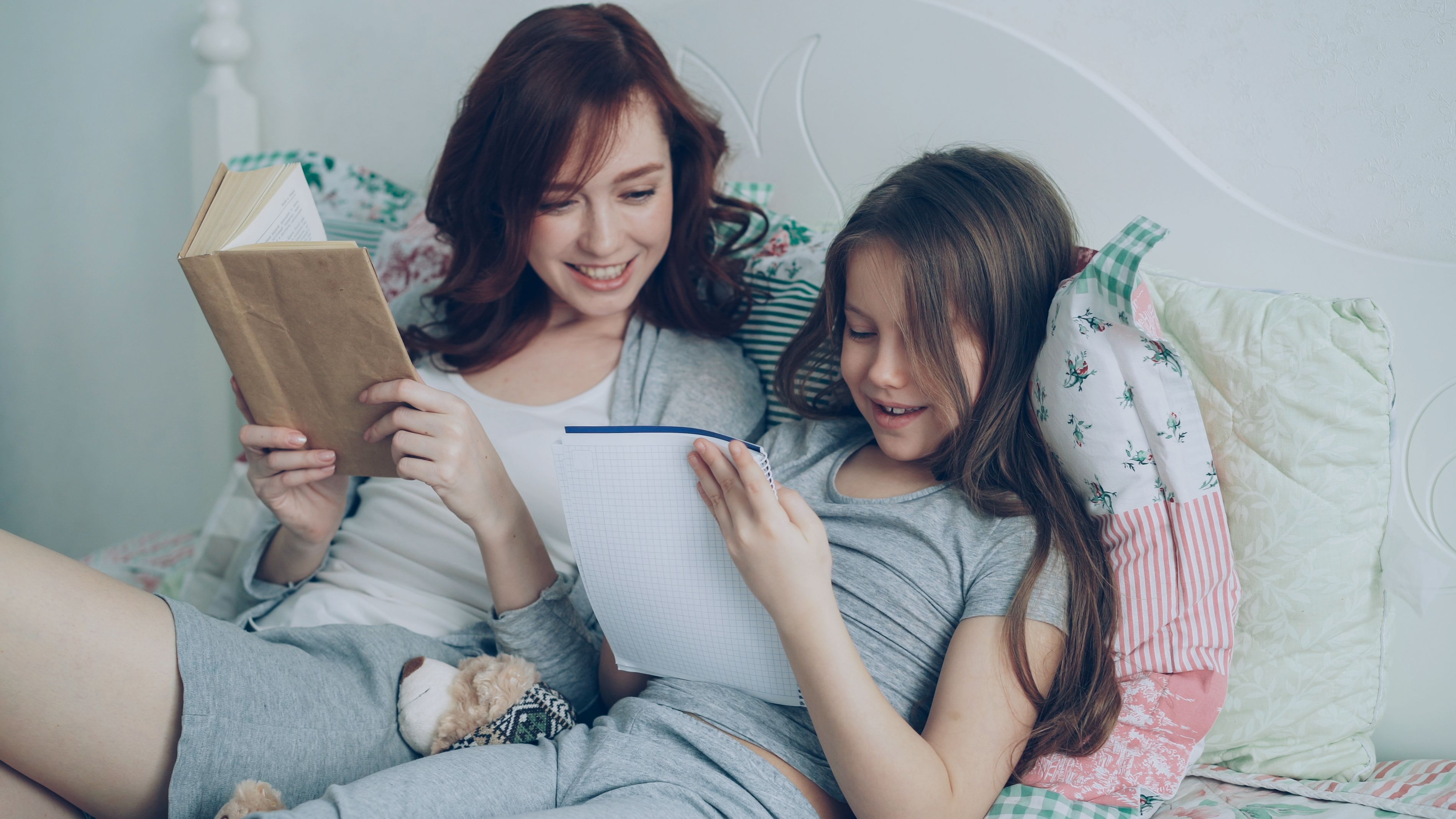
Phase: School-Age · Topic: Parenting · Type: Evergreen · Reading time: ~8 min
In 2025, the National Literacy Trust surveyed more than 110,000 children aged five to eighteen across the UK and found that only one in three said they enjoyed reading in their free time. That is the lowest figure in twenty years of tracking. Daily reading — not just occasional dipping in — had fallen to fewer than one in five. The US picture is similar: a 2025 study published in iScience, tracking data from 236,000 Americans over two decades, found that daily reading for pleasure has dropped by more than 40 percent since 2003, a sustained decline of roughly three percent per year.
This is not a problem of children lacking ability or access. It is a problem of preference. In a world where the phone, the tablet, and the gaming console offer constant, frictionless stimulation, the slow burn of a book has to compete — and most children have not been given the tools to find it preferable.
The good news is that those tools are straightforward. What separates children who grow up to be readers from those who don't is not innate disposition. It is a set of specific, consistent habits, most of which are entirely within a parent's control.
What's actually at stake — and why it's not just about school performance
Before the practical strategies, the research is worth sitting with for a moment, because the stakes here are often misunderstood. Reading for pleasure is not primarily about grades.
A 2024 study from Cambridge University and Fudan University, published in Psychological Medicine, followed children who read for pleasure from an early age and scanned their brains in adolescence. Children who had read recreationally showed measurably larger brain areas in regions linked to cognitive function, mental health, behaviour, and attention. Not marginally larger — the researchers described these as significant structural differences. The National Literacy Trust's own data found that twice as many children who enjoy reading had above-average reading skills compared to those who don't — but the benefits extend well past literacy. Reading for pleasure is consistently linked to empathy, vocabulary, resilience, reduced anxiety, and overall psychological wellbeing.
The counterintuitive finding: the Cambridge researchers identified twelve hours per week as the optimal amount of reading for these developmental effects. That works out to about ninety minutes a day — something children who genuinely love reading reach without effort, and something children who find reading a chore may never approach.
Getting a child to enjoy reading, in other words, is the lever. Everything else follows.
The single most underused strategy: keep reading aloud past age eight
Most parents read to young children and stop when children can read independently. This is the most common and most consequential mistake in raising readers.
A 2016 Scholastic survey found that while 59 percent of parents read to children from birth to age five, only 17 percent keep reading aloud to children aged nine to eleven. Yet 83 percent of children aged six to seventeen reported that being read to was something they loved or liked a lot. The mismatch is striking: children want it, parents have stopped doing it.
Why it matters at this age: a child's listening comprehension outpaces their reading ability until around eighth grade. This means a ten-year-old can follow and deeply enjoy a story heard aloud that they would find too hard, too slow, or too frustrating to decode themselves. Reading aloud to an older child exposes them to vocabulary, sentence complexity, and narrative depth they cannot access independently yet — and they experience it as pleasure, not effort.
A 2026 study published in PLOS ONE found that nightly read-aloud sessions with children aged six to eight produced measurable improvements in empathy and creativity compared to children who were not read to. The mechanism appears to be the quality of shared attention — a parent and child inhabiting the same story, at the same time, with no other demands.
Practically: pick something you both want to hear, not something you think they should read. Read one chapter per night, consistently. For children aged eight to twelve, excellent chapter book series to start with include The BFG, Charlotte's Web (for younger children in this range), The Phantom Tollbooth, Percy Jackson and the Lightning Thief, and A Wrinkle in Time. A good rule of thumb: if you're looking forward to picking it up again tomorrow, they are too.
Worth knowing: A child's listening level doesn't catch up to their reading level until around eighth grade, according to a landmark study by researcher Thomas Sticht. This means reading aloud to a ten-year-old gives them access to books their independent reading skill can't reach — and helps them develop the vocabulary and comprehension needed to get there faster.
Let them choose their own books — including ones you'd rather they didn't
The research on reading motivation is consistent: children who choose their own books are significantly more likely to finish them, enjoy them, and pick up the next one. The corollary is also true: children whose reading is directed entirely by adults, schools, or summer reading lists associate books with obligation rather than pleasure.
This does not mean no guidance. It means the child's preferences lead. A child who will only read Diary of a Wimpy Kid, graphic novels, or sports biographies is a child who reads. Defend that. The research on reading transfer — the idea that children who read "low-quality" books don't develop taste for higher-quality material — is weak and contested. What is well-established is that children who read for pleasure at age eight are more likely to read for pleasure at fifteen. The books are secondary to the habit.
For children who claim not to like reading, the first question is almost always: have they found their genre? Children who hate fiction often love non-fiction. Children who find chapter books slow will sometimes devour illustrated or graphic-format books. Children who have given up on reading entirely will sometimes re-engage with a book that connects to an existing obsession — a sport, a game, an animal, a period of history. The library is where this discovery happens most efficiently: a librarian who knows the children's section can find a match in ten minutes that a parent might take months to stumble on.
The modelling problem most parents don't notice
One of the strongest predictors of whether a child becomes a reader is whether they see their parents read. This is not about enforcement ("look, I'm reading, now you should too") — it's about ambient evidence that reading is something adults find worthwhile.
A 2025 HarperCollins survey found that one in three Gen Z parents view reading as "more a subject to learn" than something enjoyable — and that their children are adopting the same framing. The parent who reads their own book alongside a child during reading time communicates something different from the parent who is scrolling their phone while the child is supposed to be reading.
You don't have to perform reading. But if you genuinely don't read for pleasure, your children have no evidence that it is something adults do.
This connects to the related issue of how parents talk about books. Calling a child's book "babyish," sighing about how long it's taking them to get through it, or pushing them repeatedly toward "better" books they're not interested in sends clear signals about what reading is for. Reading for pleasure requires that pleasure is genuinely available — which means no judgment about what they read, how fast they read it, or whether they abandon a book halfway through.
The environment: books should be boring to not pick up
Children read when books are available, visible, and easier to reach than an alternative. The physical environment of a home communicates what the household values.
Concrete changes that shift the odds: a dedicated reading area — even a comfortable chair and a lamp in a corner — creates a specific place that is for reading. A low bookshelf in the child's bedroom stocked with books they chose is far more likely to be used than a bookshelf in a study or living room stocked with books parents selected. A library card and a regular library trip — not as a chore, but as an outing where the child has time to browse — creates steady supply.
The friction point worth thinking about: screens are almost always more immediately accessible than books in most homes. Phones charge on bedsides; tablets live on coffee tables. If books are in a box or behind glass or in an adult's space, a child reaching for something to do will reach for the screen. This is a design problem, not a character problem.
For children aged nine and up who resist physical books, a Kindle or Kobo loaded with books from the library's Libby app solves the accessibility issue without the distraction risk of a full tablet. It is not the same as a physical book, but a child who reads three books a month on a Kindle is a reader. For more on supporting reading at every developmental stage, the post on raising a strong reader covers the specific strategies that matter at each age.
What to do about screens — the honest version
Telling children to read instead of using screens, without addressing the underlying dynamics, does not work. Children don't choose books over phones because they've been told to; they choose books over phones because books reliably provide something they want: suspense, humour, emotional identification, answers to questions they have.
A book that a child is genuinely gripped by does not need to compete with screens in the same way that a book they're indifferent to does. The solution to screen competition is not restriction; it is finding the books that compete. Once a child has experienced the genuine absorption of a good book — the kind where someone calls them for dinner three times and they don't hear it — the comparison shifts.
That said: the environment still matters. Phones in bedrooms at night make reading before sleep harder. If the choice at 9pm is a glowing phone or a book, most children will take the phone — not because they prefer screens to books in principle, but because the phone is dopamine-optimised and the book requires them to get started. A practical norm used in many families: devices charging outside bedrooms after a certain time, with a book available instead. For the broader picture on kids and smartphones and where to draw the line, the evidence on usage and timing patterns is worth reading separately.
The long version of the answer
Raising a reader is not a project with a start and end date. It is the accumulation of small decisions over years: a library visit here, a chapter read aloud there, a book bought because a child expressed curiosity about sharks, a choice to leave them in the car with their book for ten more minutes because they didn't want to stop.
The National Literacy Trust found that children who enjoy reading are twice as likely to have above-average literacy skills. Cambridge found structural differences in their brains. But the parents doing this work aren't thinking about brain structure. They're thinking about getting through one chapter tonight before the light goes out.
That is enough. Do that enough times, and you have a reader.
🌱 Discover Your Parenting Wellbeing Score
Get your personalised score across 9 dimensions and find articles curated for your stage.
Get My Score →Community comment
Sign in to join the conversation and share your parenting experiences.
Sign in with Google
No comments yet — be the first to share your thoughts! 💛